
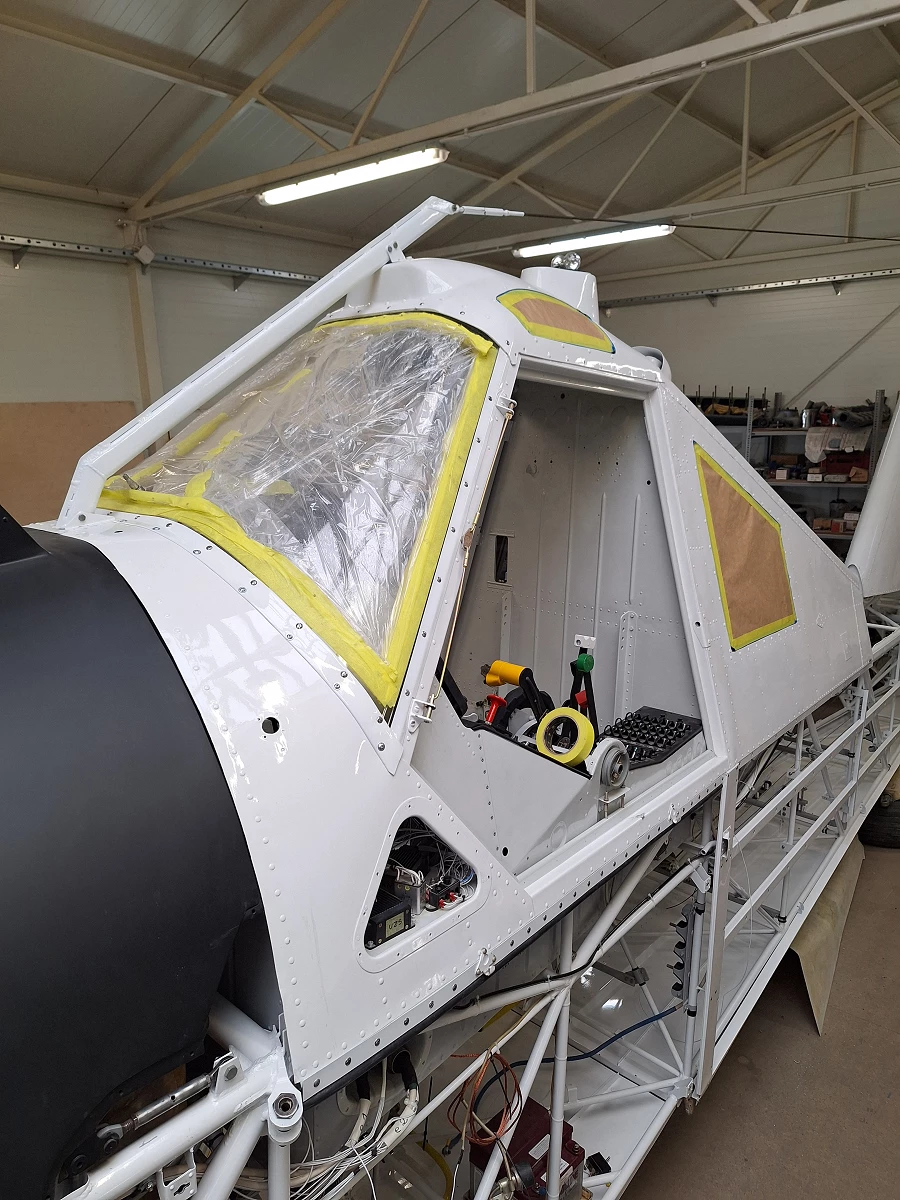
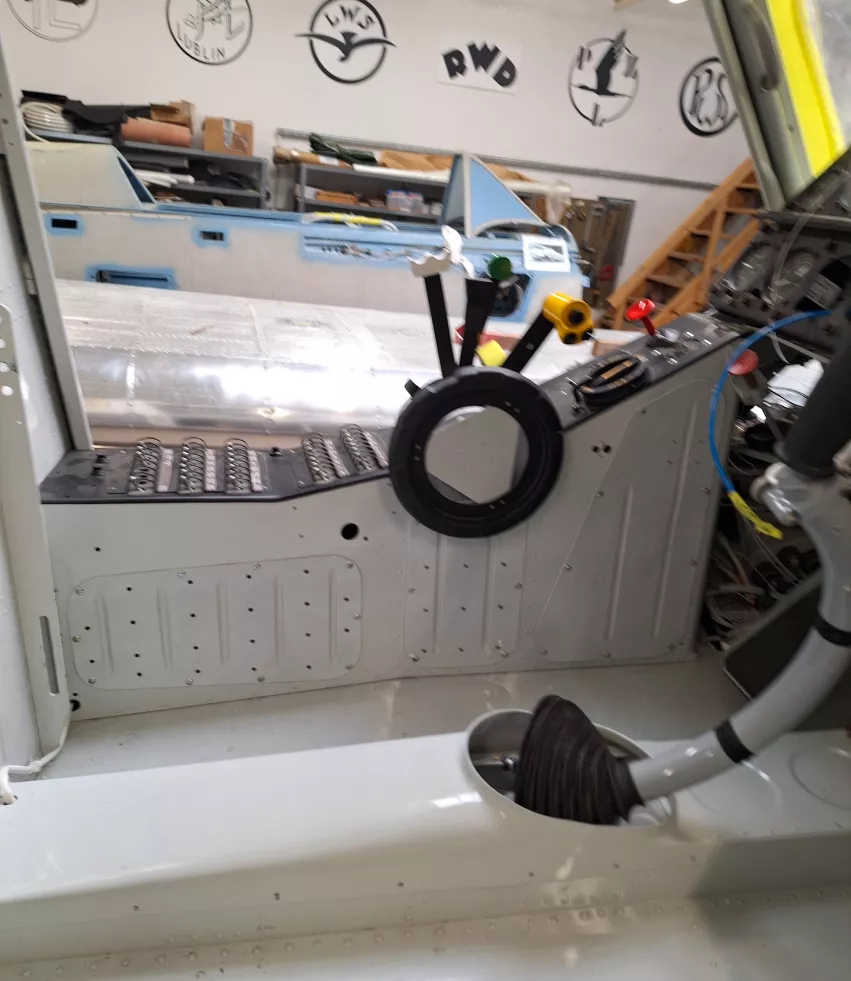
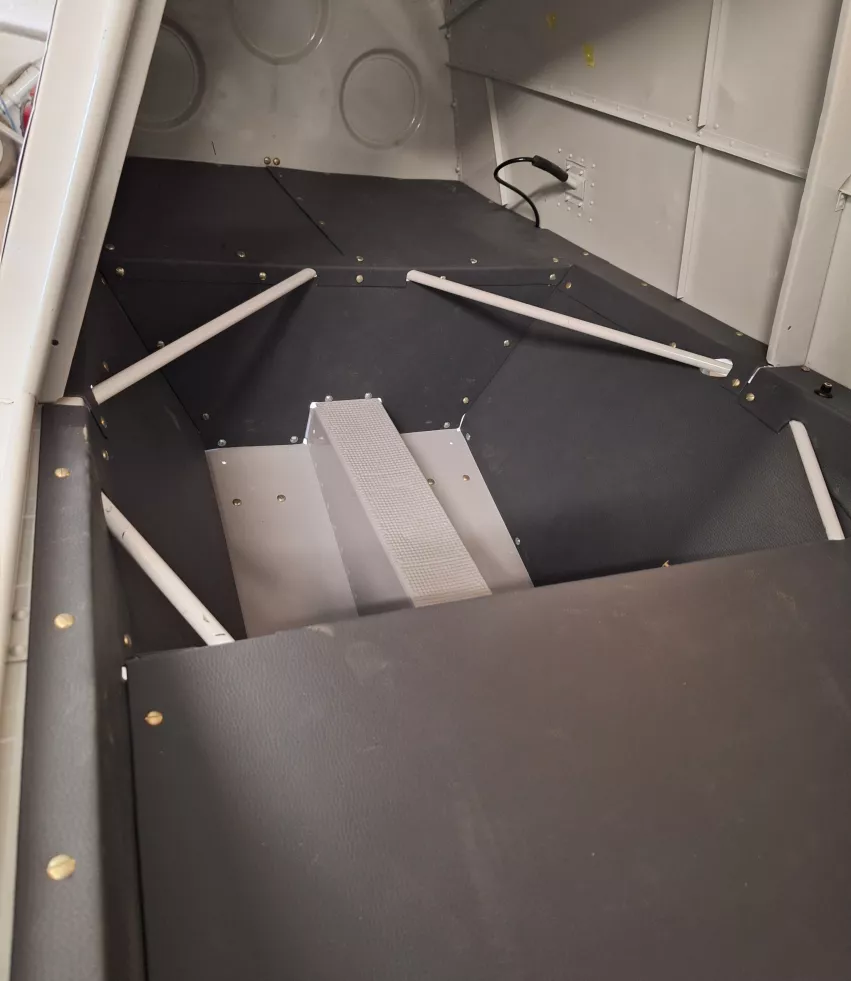
Installation of eyelets and covers in the cockpit.
March 18, 2026
Project "Raven" – Part IX
March 18, 2026
Project PZL 106 "Raven"
More significant progress on the project!
Here’s another batch of photos and updates from Henryk Wicki’s workshop. We firmly believe that this is the year the aircraft will take its maiden flight, and everything points to that happening. We’re all keeping our fingers crossed. As is our tradition, we’re revisiting the model’s history, which is slowly coming together. Today we’ll talk a bit about the equipment, and next time we’ll cover the engines.
Equipment: VFR instruments with gyrocompass, ADF, UHF radio.
Systems: electrical, pneumatic, heating.
Agricultural equipment: a removable 1,300-liter chemical tank made of fiberglass-epoxy composite, mounted via hydraulic lifts. The lid can be equipped with a device for pneumatic remote opening. Tank bottom with a device for emergency chemical discharge. Option for pressurized filling with liquid chemicals. Centrifugal pump for liquid chemicals driven by a fan. Tunnel spreader for powdered chemicals. The liquid chemical kit includes hoses with sprayers or atomizers.
Firefighting equipment: a water bomb discharge device on the bottom of the chemical tank, an additional 74-liter tank for foaming or wetting agent, along with an electric pump on a pallet under the pilot’s cabin. The device allows for the release of 1,300 liters of water with a fire-retardant agent within 1.5 seconds.
Special equipment: an instructor’s cockpit designed for installation in place of the chemical tank on each aircraft. The instructor’s cockpit, which is a suitably modified chemical tank, is equipped with a set of controls and basic piloting instruments. To improve visibility from the main cockpit, the instructor’s seat is located on the right side. Under the floor of the instructor’s cockpit is a 400-liter tank for liquid chemicals. This solution enables safe training in the practical performance of agricultural aviation operations. Continued in the next article.
Let’s take a look at the progress of the project—a collection of photos from Mr. Henryk Wicki’s workshop.
Repaired (partially rebuilt) engine compartment covers
%20maski%20przedziału%20silnikowego.webp)
pre-installed protective covers in the mechanic's compartment
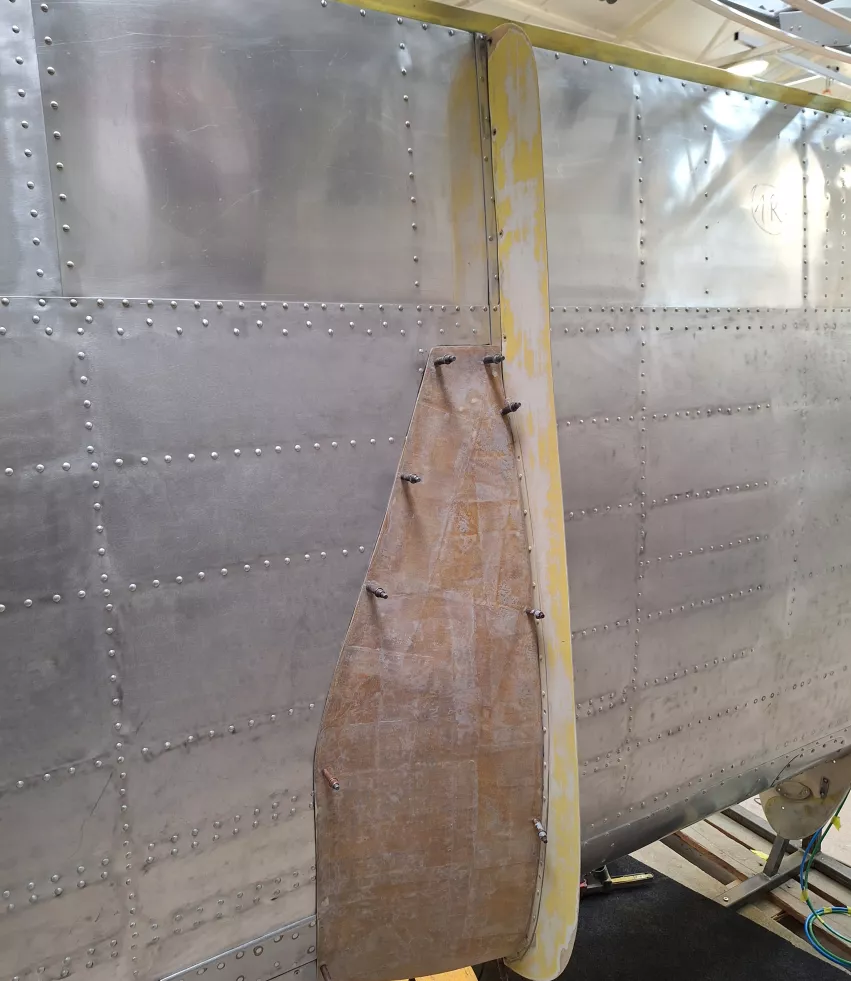
The fairings for the strut connections have been repaired and are ready for painting
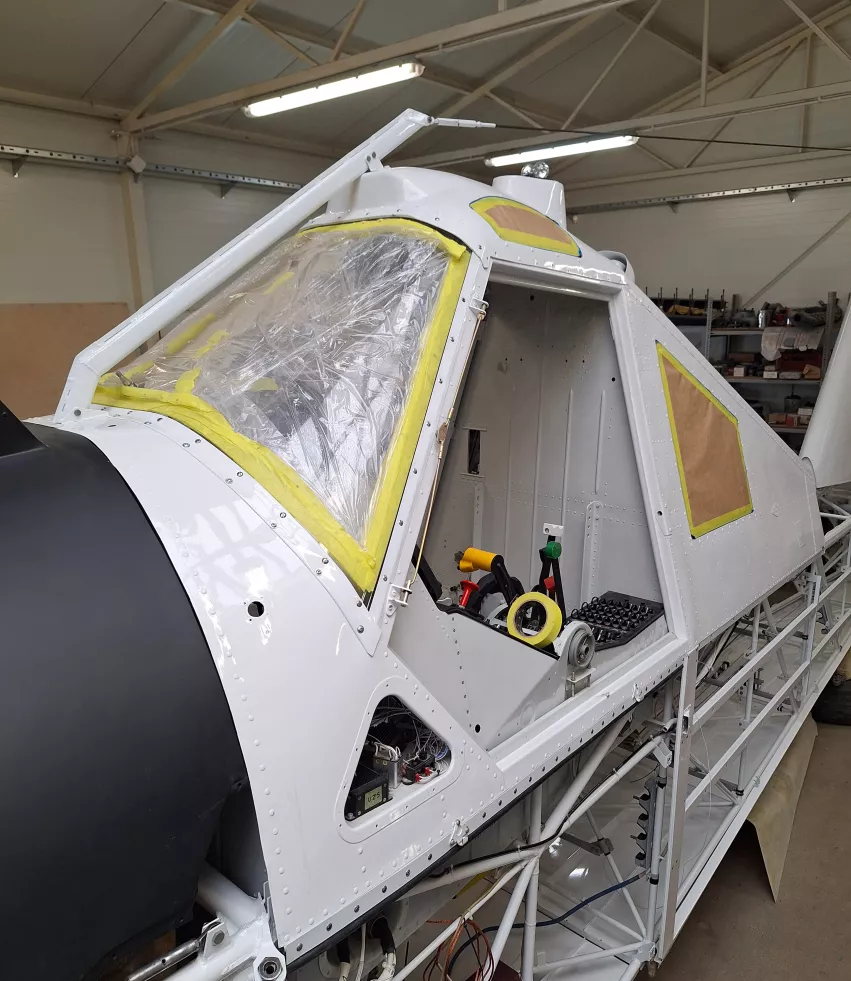
Pre-installed windshield and rope cutter
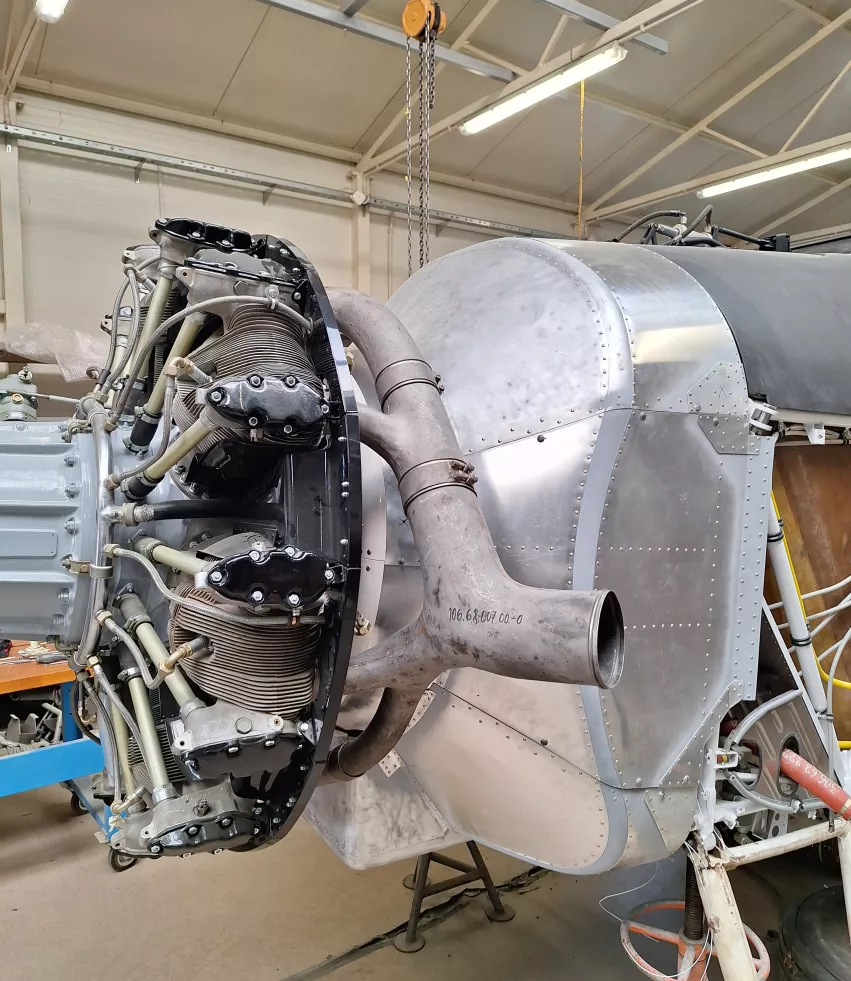
Exhaust manifold and engine compartment covers – left side
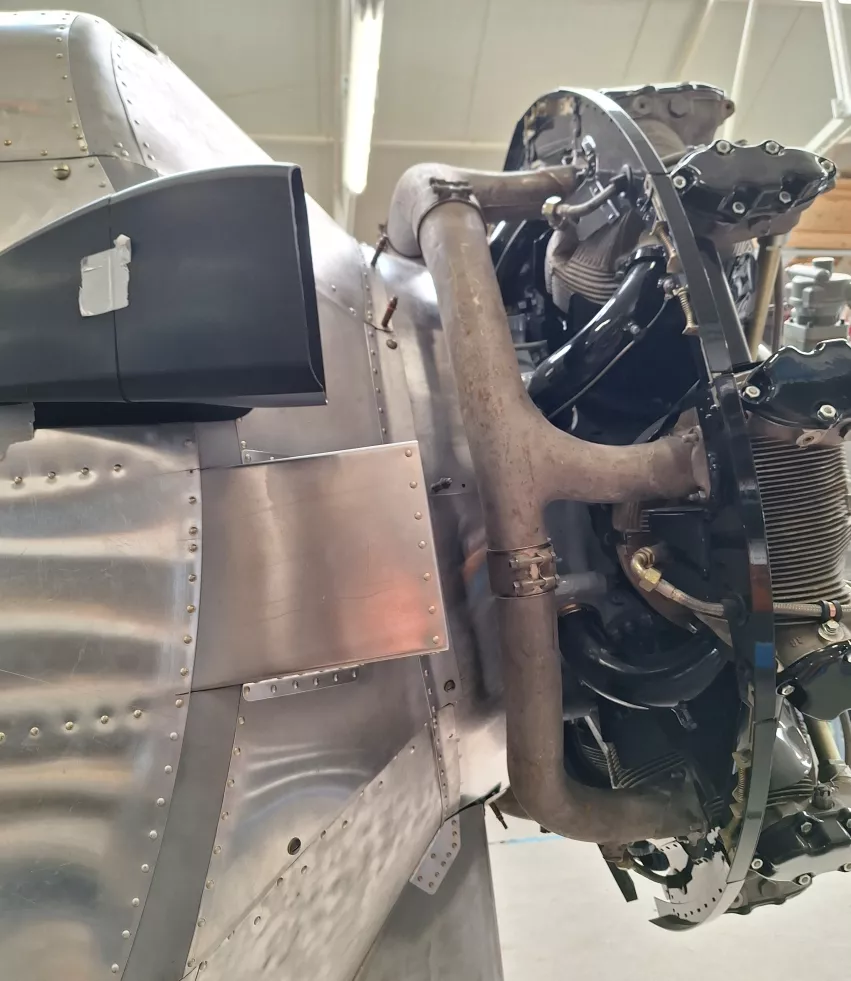
Exhaust manifold and engine compartment covers – right side
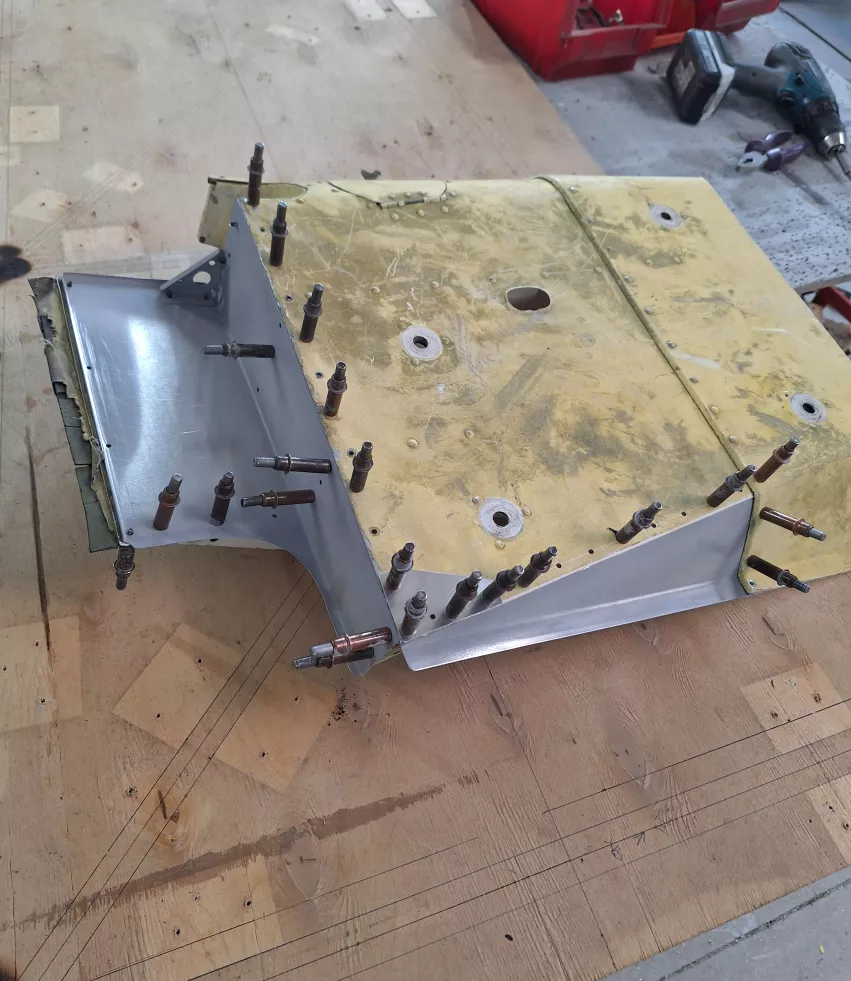
Repairing the lower left tank cover involves chemicals
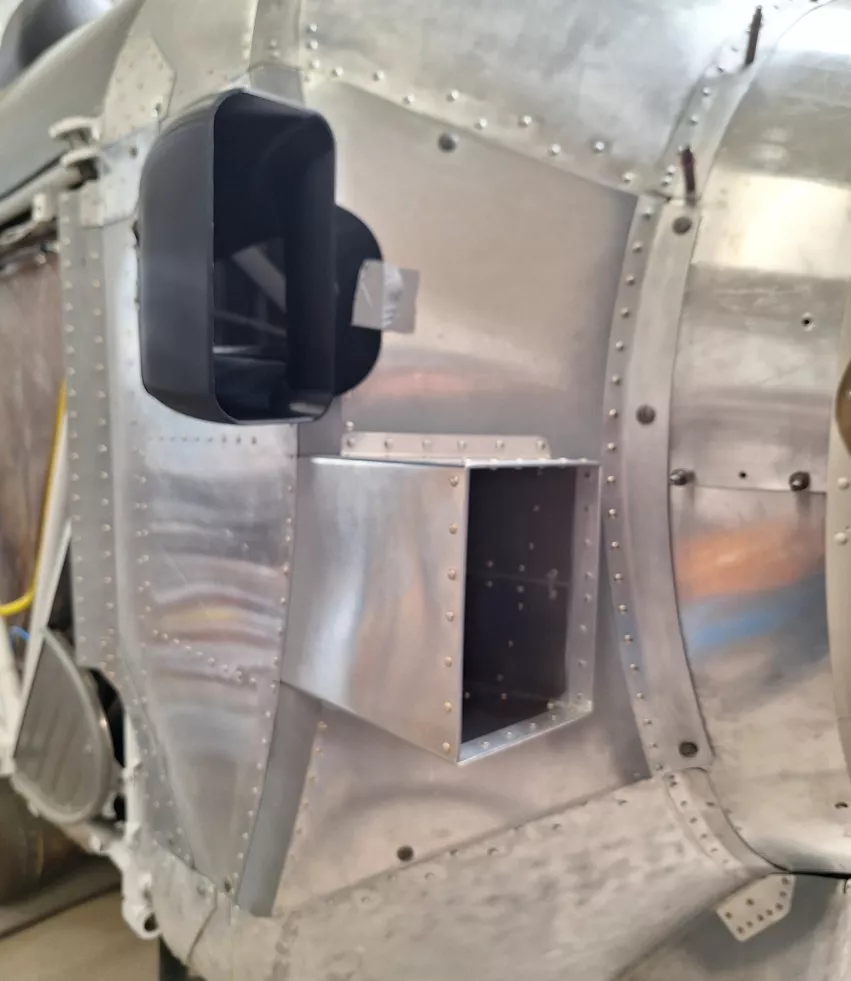
Engine compartment covers – right side. Visible air intakes
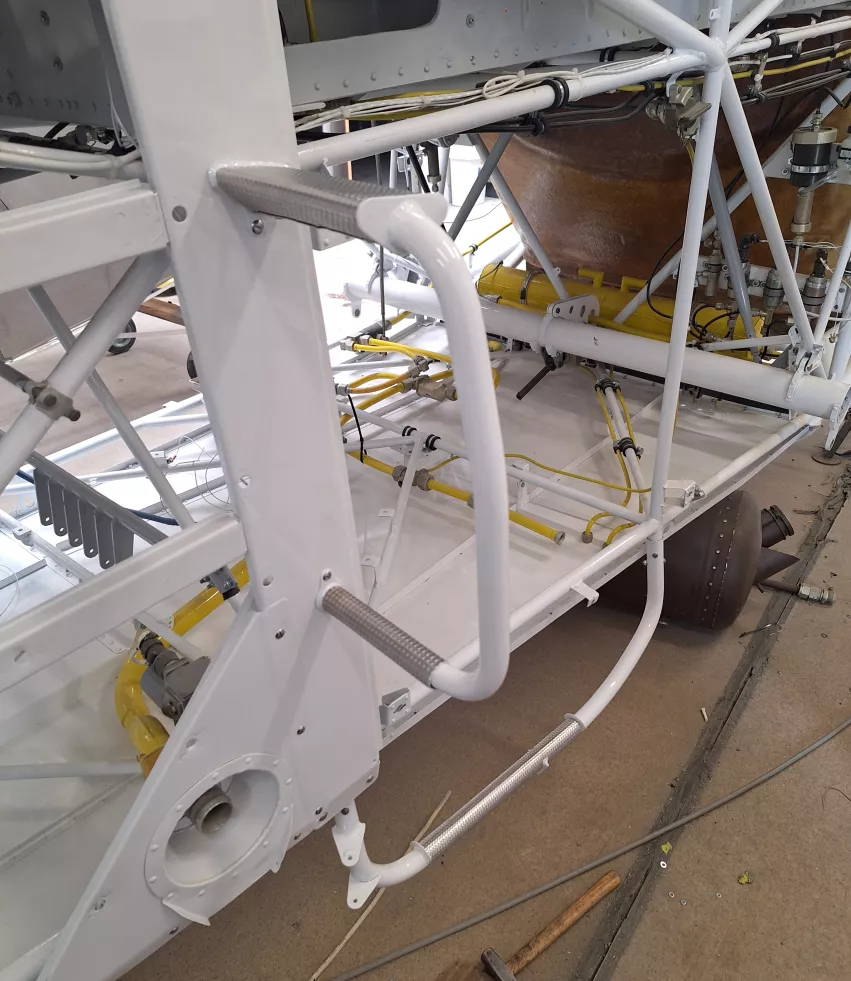
Entrance steps installed on the right side of the cab
We are patiently waiting for further updates and more photos.