
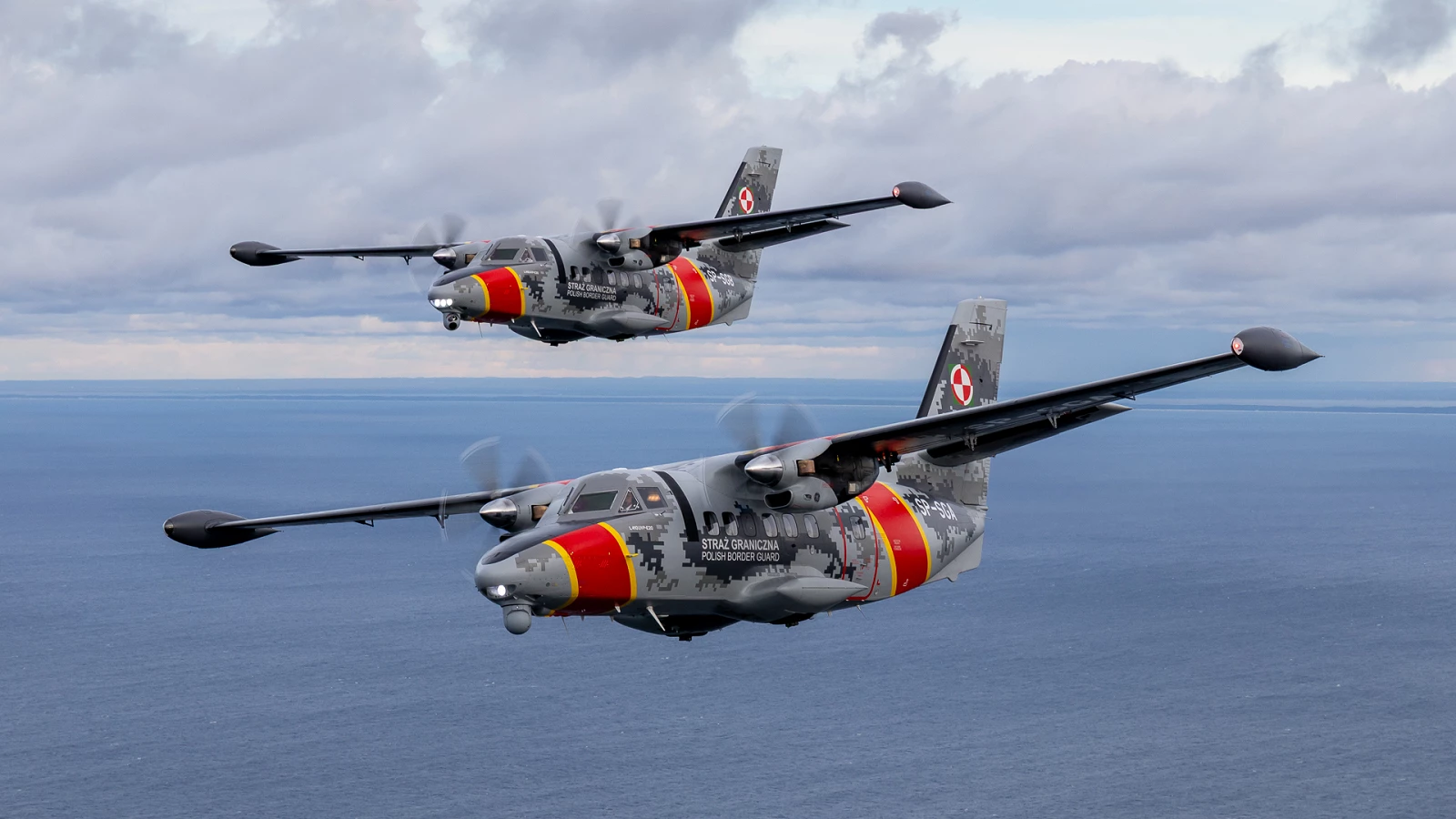
Turbolets in the Border Guard

The more you have, the more you want—after several years of operating two L-410 Turbolets, the Border Guard decided to expand its fleet with two more aircraft, which have been in service since late 2025. Filip Modrzejewski took a closer look at the fleet’s newest additions during a visit to the Border Guard base last year. In this article, we look back on that exciting encounter.
The Border Guard has been operating Turbolets since 2021—specifically, the L-410UVP E20 variant, specially adapted for various types of missions across all branches of service. Two original Turbolets in white livery have been stationed in Gdańsk since the beginning of their service, and as of late 2025, they were joined by two additional aircraft, this time in digital camouflage livery.
Border Guard Base in Gdańsk
We arrive at the Gdańsk airport during the day and head straight to the Border Guard air base, located near the Air Ambulance base. I see a large, modern hangar where older aircraft are maintained, as well as helicopters used for various missions in the Baltic Sea region and beyond.
The scale of the operation is impressive—both the hangar and the apron can accommodate four large aircraft and several helicopters. The base is fully self-sufficient; we have both flight and technical personnel on site, and all Border Guard pilots are eagerly awaiting the arrival of the new aircraft, which will take place in a few minutes. Also waiting here with us are representatives from JB Aviation, who handled the tender process and the delivery of the aircraft to this special standard.
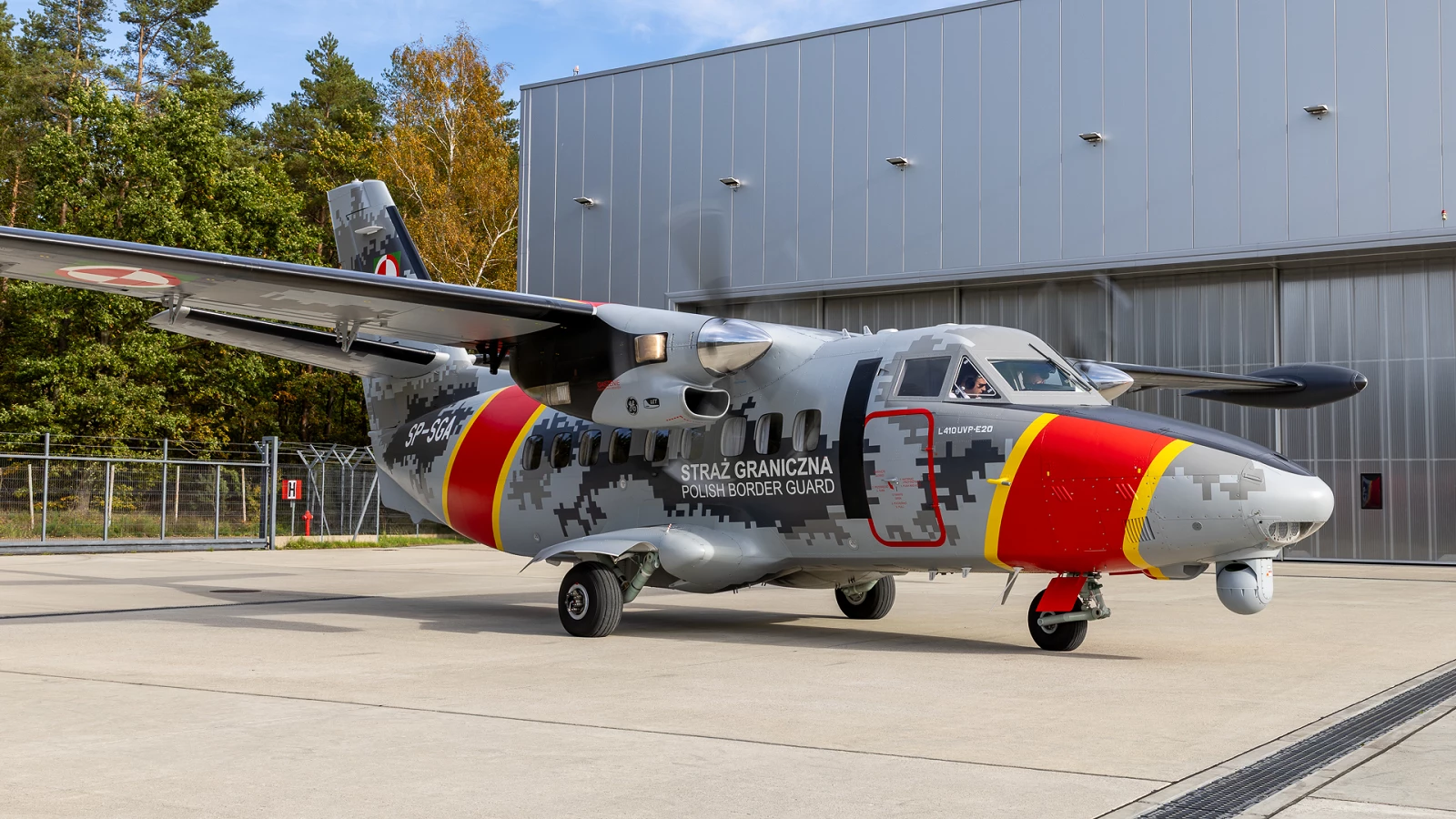
A few minutes past 1:00 p.m., we can already see the first of the two aircraft on approach; it flew here straight from the Aircraft Industries factory in Kunovice, Czech Republic. After a short taxi, both planes—still bearing their civilian registrations, SP-SGA and SP-SGB—are now in position, along with the pilots and technicians from the factory. Before the aircraft begin flying on actual missions, they still face a process of several weeks to re-register them under SN markings, that is, in the state aviation registry.
Specialized Version and Equipment
The full designation of this aircraft variant is Turbolet L-410UVP-E20. The first aircraft delivered to the Border Guard were configured to the MPA (Maritime Patrol Aircraft) standard. The two newest aircraft are multi-purpose designs equipped for various missions—they will perform well both over land and over water.
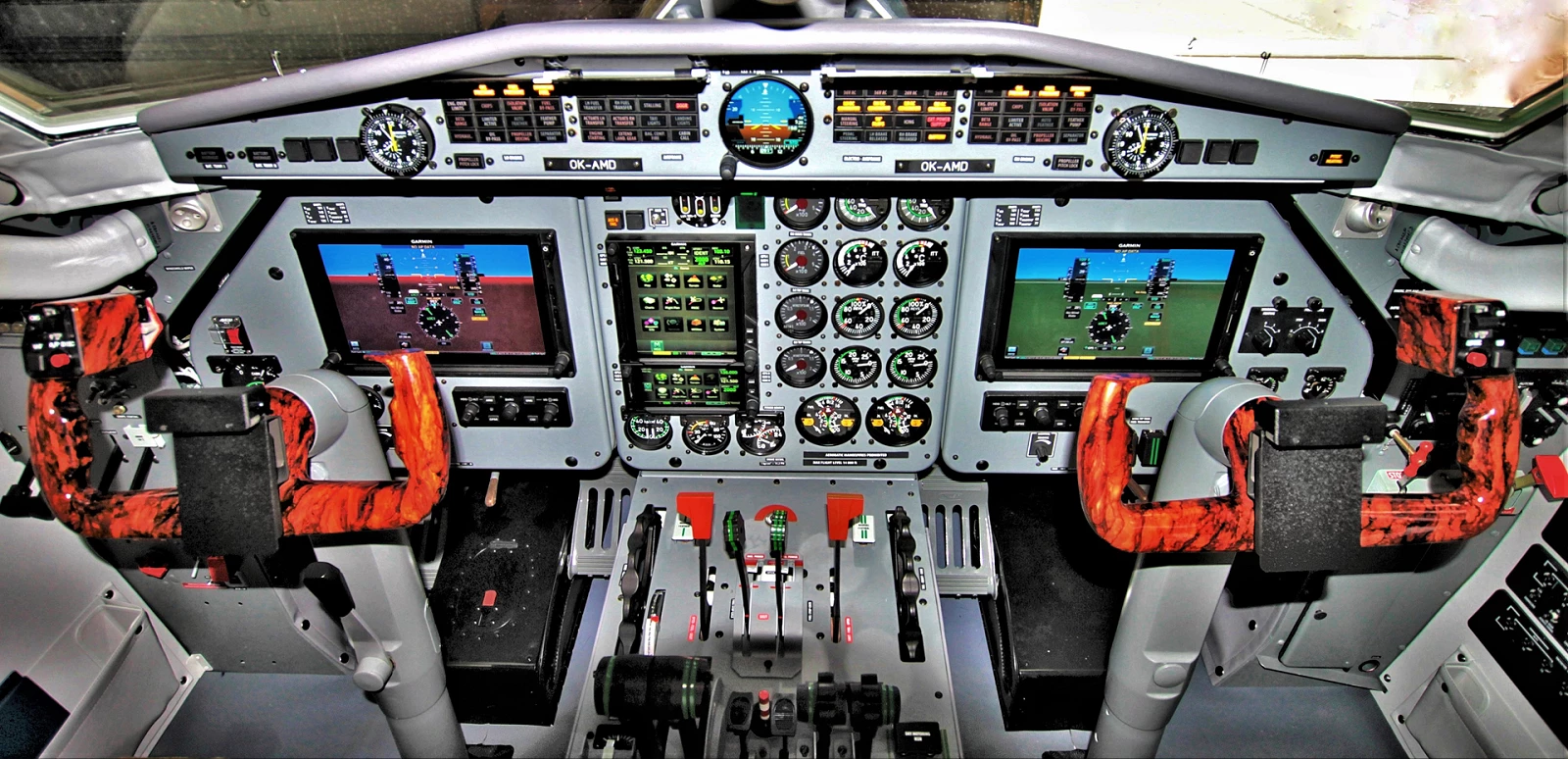
Starting with the cockpit—here we’ll find one of the most comprehensive equipment configurations for this version of the Turbolet, namely large Garmin G700TXi screens connected to GTN-750 and 650 navigation systems, as well as backup devices—the Garmin Gi-275. The nose of the aircraft also houses a GWX-75 weather radar, and all systems are fully integrated with one another—this is definitely a convenient solution for the pilot. “This is the best avionics configuration possible—thanks to the system’s modular design, we were able to further customize the cockpit to meet the Border Guard’s requirements and enable easy expansion in the future, should the need arise,” explains Maciej Kotas, who was responsible for acquiring and equipping the aircraft.
It’s worth mentioning that the pilots in the cockpit also have an additional view of all the cameras and systems installed on the aircraft. I’m also struck by the wooden trim on the control columns—it’s not every day you see such craftsmanship in airplanes.
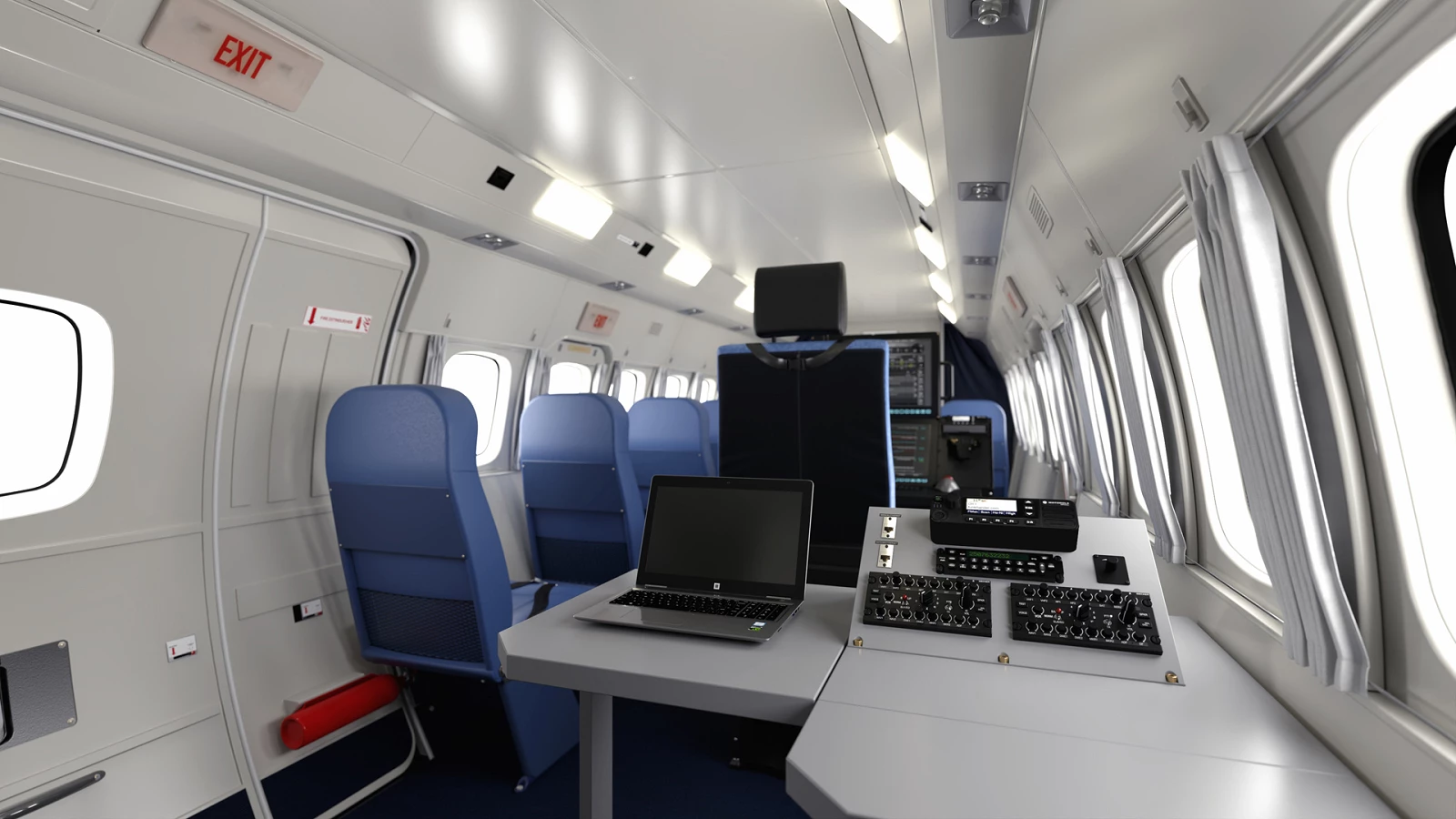
As you enter the passenger cabin (through a narrow passageway to the left and right of the cockpit), you’ll notice the biggest difference compared to the “classic versions.” There are no traditional passenger seats here, but rather two fully equipped stations for operators (primary and secondary) and for two passengers. “Depending on the type and complexity of the mission, the entire system can be operated by one person, or the work can be divided among four people—one can operate the camera, another can be responsible for transmitting information to the ground, and yet another for monitoring the onboard sensors,” one of the Border Guard operators tells me.
The entire computer system (also designed by LET Industries) is impressive—it’s clear that this is a massive machine that ties everything together, and even the seats are high-end seats for mission operators from Martin Baker. To ensure the entire structure is well-supported, the floor of this aircraft has been additionally reinforced; however, despite these modifications, the aircraft still features modern elements such as LED lighting. It’s worth noting that the cabin configuration can be easily modified by the Border Guard (e.g., to provide more space for luggage), and since the cabin itself is not pressurized, every passenger on board is additionally equipped with an oxygen mask for flights above FL100.
Sensors, cameras, and more
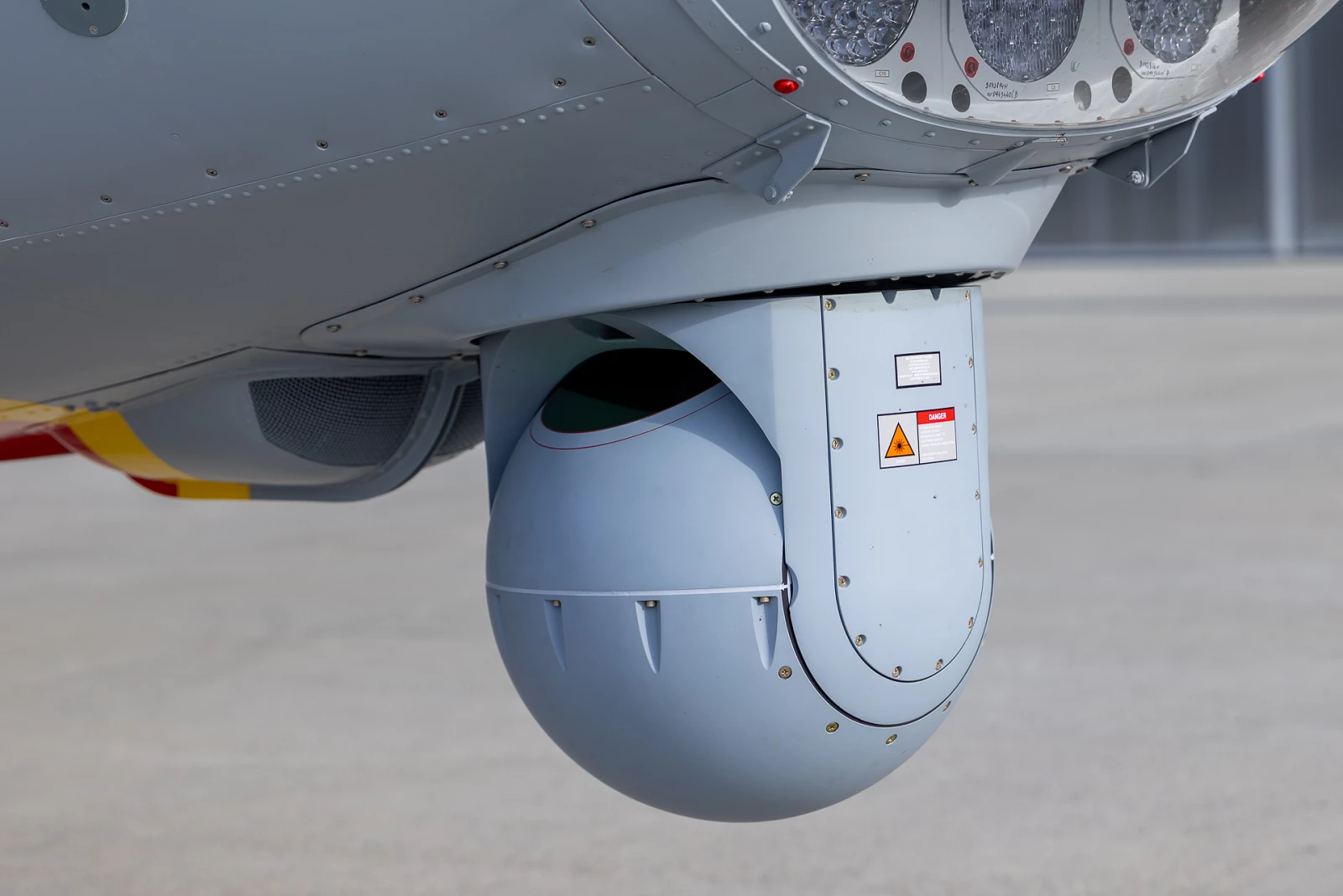
When looking at these aircraft, the first thing that catches the eye is the paint scheme—digital camouflage in shades of gray, along with contrasting orange elements, are characteristic features of these Turbolets. It’s also impossible not to notice the additional Wescam MX-15 camera head mounted under the nose of the aircraft—it’s the backbone of the entire surveillance system and the most advanced version of this camera in the world.
This sensor head is actually an advanced stabilization system equipped with several components—a daylight camera, a low-light camera, an infrared (IR) camera, as well as a spot illuminator and a laser rangefinder. These are integrated with a mission control and management computer, which also receives information from numerous sensors mounted on the aircraft, as well as from weather radar and even satellites.
What does this mean in practice? You can observe and track objects of interest (such as container ships or vehicles) from a distance of 30–35 miles in good weather, with a stable, Full HD image. A major advantage is that even though the aircraft is constantly moving forward or circling, the selected object is tracked at all times—which is very impressive. At night, the infrared camera is extremely useful, and thanks to the IRIDIUM (SDL-350) satellite communication system, photos and video can be transmitted live from the aircraft to the ground station.
Why Turbolety?
For several reasons—first, our knowledge of their design and the current use of such machines. “This will make it much easier for us to operate and maintain them—whether in the air, on the ground, during technical maintenance, or by system operators. Over the past four years, we’ve become very familiar with these machines, so using the same design with newer equipment will be a very straightforward process for us,” one of the pilots tells me.
Another argument was the tender requirements, which were defined by the Border Guard, as well as the issue of the aircraft’s performance and quality relative to its price. In this regard, the Turbolets were unmatched in terms of their tender capabilities. Furthermore, these aircraft perform very well in various types of public service operations—their range, endurance, and wide range of configuration options allow them to fulfill a variety of mission profiles.
It’s also worth mentioning that, despite being a large, heavy, multi-engine turbine aircraft, the Turbolet also has good STOL capabilities—at MTOW, the distance required for takeoff and landing is approximately 500 meters—and it’s important to remember that we’re talking about an aircraft with a takeoff weight of over 6 metric tons. In addition, it can operate from both paved and unpaved runways, and in case of any questions, needs, or training requirements, the aircraft manufacturer is practically “on site” — a 5-hour drive (or 2-hour flight) from Warsaw to the Czech Republic (Kunovice), with no language barrier, which simplifies many situations for the Border Guard as the operator.
The Border Guard’s fleet of four L-410s is impressive. Our pilots are constantly improving their skills and upgrading their equipment, which is appreciated not only by our allies but also by the citizens of Poland, who can rest assured that the borders are secure.
Text and photos:Filip Modrzejewski


