
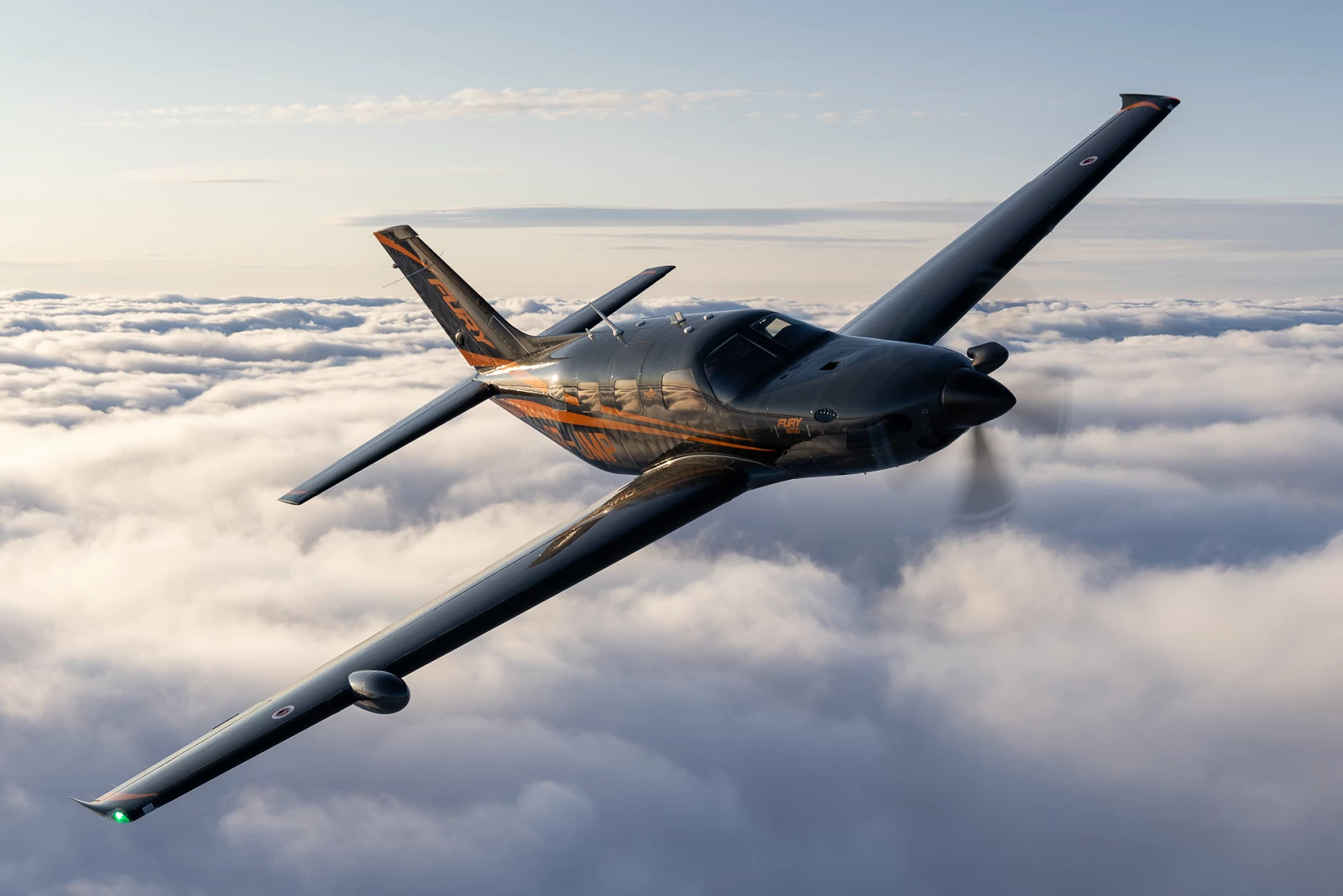
Piper M700 Fury—Where Power Meets Performance

When you own a turbine-powered aircraft, you always want to fly faster and higher, especially on longer flights, where even a dozen or so knots makes a big difference. Piper meets these expectations with its fastest model in the M-Class family—the M700 Fury. More and more of these aircraft are beginning to appear in Europe, and we already have three such planes in Poland.
The key features associated with the M700 are power, performance, and safety. All of these aspects are present in this aircraft, and it’s definitely a step in the right direction. A speed of over 300 kts, a range of over 1,800 nm (economy cruise), and a climb rate of over 2,000 ft/min are no longer just impressive figures; combined with advanced systems, this aircraft is not only fast but also comfortable and safe.
When I first saw the M700 Fury in photos and in person, my initial thought was that it was simply a more powerful version of the M600. After taking a closer look at this machine, flying aboard it, and having a long and interesting conversation with both the owner and the pilot, I know I was wrong. The difference lies in the details, which in this case make all the difference.
Power and Performance
The biggest difference and improvement is at the front of the aircraft. The M700 Fury is equipped with a PT6A-52 engine (the M600 has the PT6A-42A model), which generates 700 KM of power. That’s 100 KM more than in the previous model, allowing it to reach a cruise speed of 301 KTAS (over 25 KTS faster than before). It must be said that in such a relatively small, 6-seat aircraft, 700 KM is a truly substantial power reserve, and the higher speed allows for savings of up to an hour on longer flights or when making multiple legs in a single day.
This power comes in handy not only during flight but also during takeoff—“As the M700 gains speed, the extra 100 KM reduces the takeoff roll by about 600 ft, which is especially useful when landing at smaller and unpaved airports. It also opens up more possibilities for us when operating in more remote locations, without the need to land at a large commercial airport and then travel to our destination,” says the pilot.
The M700’s engine, combined with a 5-blade propeller, not only ensures less vibration and a quieter cabin, but also an excellent rate of climb, which we can maintain at over 2,000 ft/min—30% more than in the previous model. Climbing to FL280 takes less than 15 minutes, and this rapid ascent is particularly useful in the summer to minimize the time spent flying in turbulent air.
How does fuel consumption compare with the new, more powerful engine? There’s no denying that flying faster means we burn more fuel—about 10 gal/hr more than the M600 model (75 vs. 65 gal/hr at maximum cruise). On the other hand, we’re flying faster, so we spend less time in the air, which means that the flight costs for the newer model are very similar to those of its predecessor and still within a reasonable range.
Security
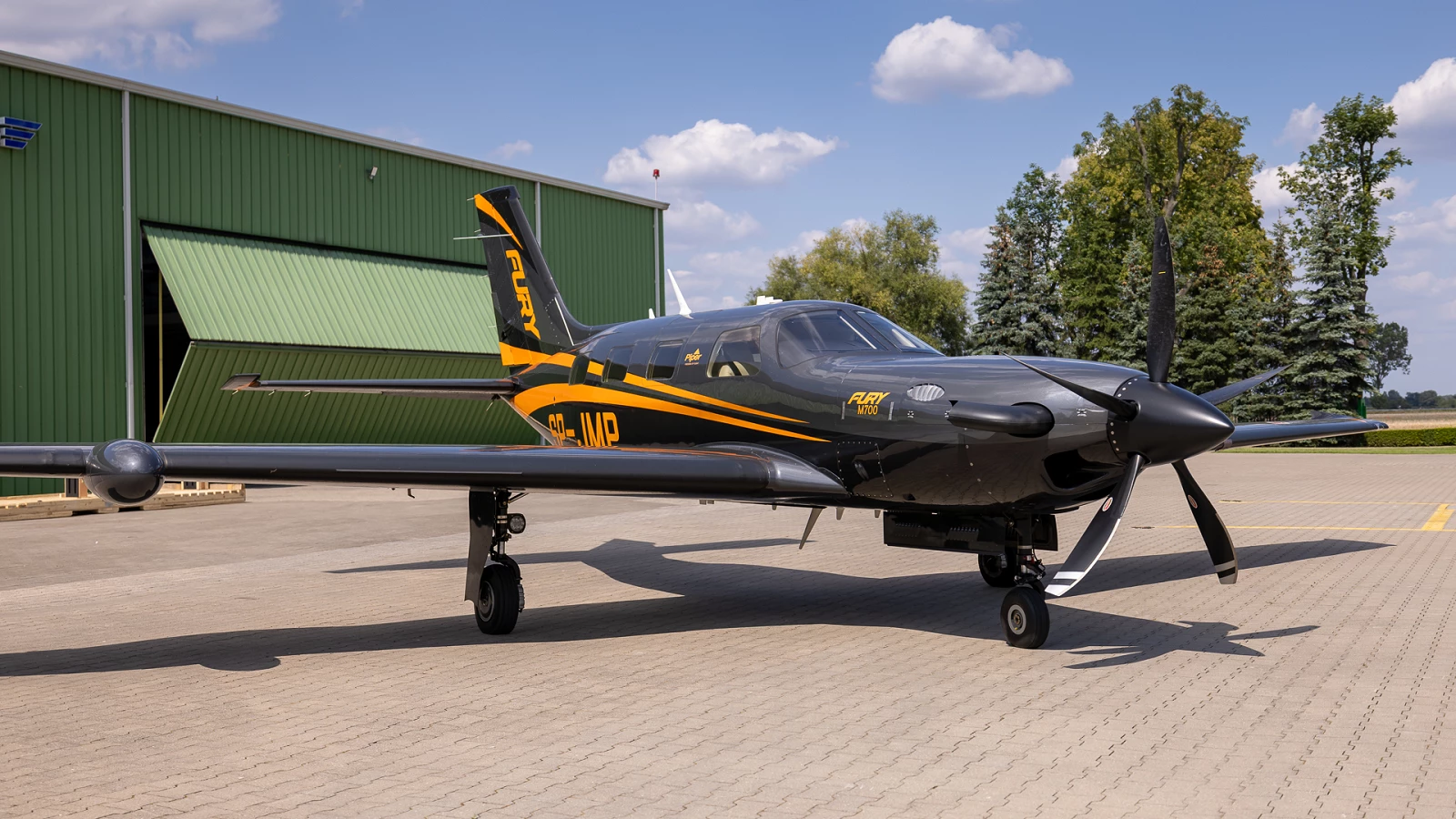
The M700 Fury’s maximum speed is 301 KTAS, while its stall speed is 61 KIAS. This is a very wide range, which can negatively affect the aircraft’s stability. Compared to its predecessor, the aircraft is equipped with a so-called Gurney flap—an additional element on the left side of the horizontal stabilizer, inspired by the world of auto racing. It is an elongated element along the trailing edge of the horizontal stabilizer that slows the airflow, which in turn increases lift—this is particularly important for rudder control at higher speeds. In addition, the aileron’s operating range has been increased to allow for full control across the entire speed range, and the leading edge has been improved to achieve such a low stall speed.
All other structural components of the fuselage and wings continue to function and look the same as in previous models. However, the emphasis on safety has increased significantly more inside the aircraft. The M700 Fury is equipped with Garmin G3000 avionics and the HALO system, which include safety features such as ESP, the “blue-level-button” (automatic recovery from unnatural attitudes), and the Autoland system—just as in the previous version.
A new feature in this model is the Autothrottle system, which makes the pilot’s job easier during SPO (Single Pilot Operations). “Using AT, I can select both a climb profile and a cruise profile, as well as a specific airspeed, and the system will automatically maintain the selected parameters. The most useful phases of flight where I use AT are the descent and the approach to landing; this ensures that I won’t exceed V_ne, and I can also easily slow down to the speed at which the landing gear and flaps deploy—this significantly reduces my workload, especially during such intense moments,” says the pilot.
Another improvement is PlaneSync technology, which allows for remote checking of aircraft parameters (such as oil or fuel levels) and makes it easier to monitor all necessary maintenance tasks. This also helps reduce the time needed to prepare the aircraft before a flight, allowing the crew to focus on passengers and get the engines ready for start-up more quickly.
On board
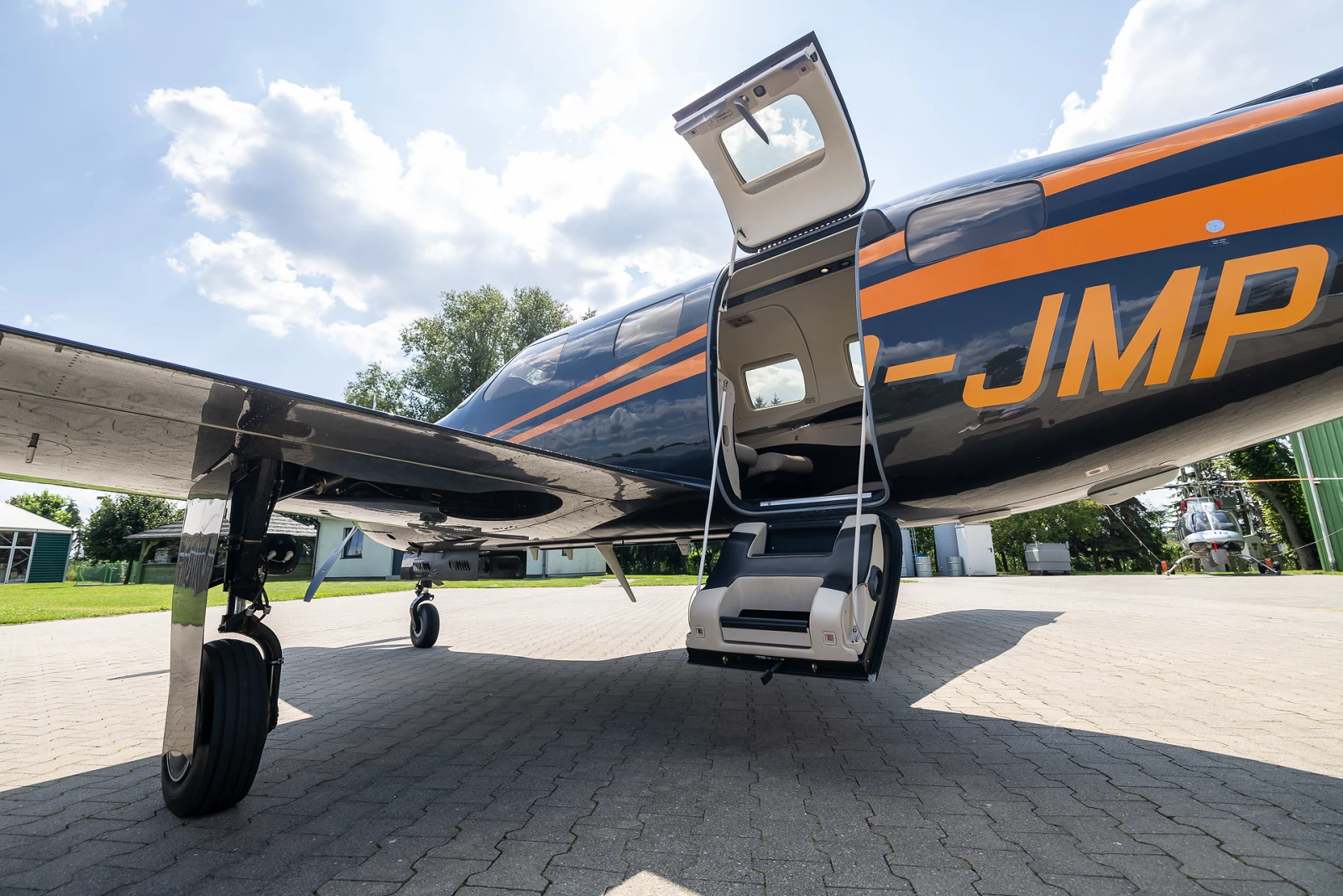
The first thing that catches your eye upon boarding is the seats bearing the M700 logo, which look very sleek, featuring a combination of chrome accents, carbon fiber, and leather. When seated in the rear, passengers have access to a table so they can work during the flight. You can also fold down one of the front seats, which turns into an additional table with space for drinks or snacks. If two people are traveling in the back, they’ll be comfortable; if four people are traveling, they’ll have much less personal space—that’s just how 6-seat planes are.
Behind the seats is a spacious luggage compartment that can hold quite a lot—“On our last flight to southern Europe, we easily fit two large suitcases and two carry-on bags,” the pilot tells me. Each passenger also has their own air vent and a dedicated LEMO port for headphones, as well as USB ports (standard and USB-C).
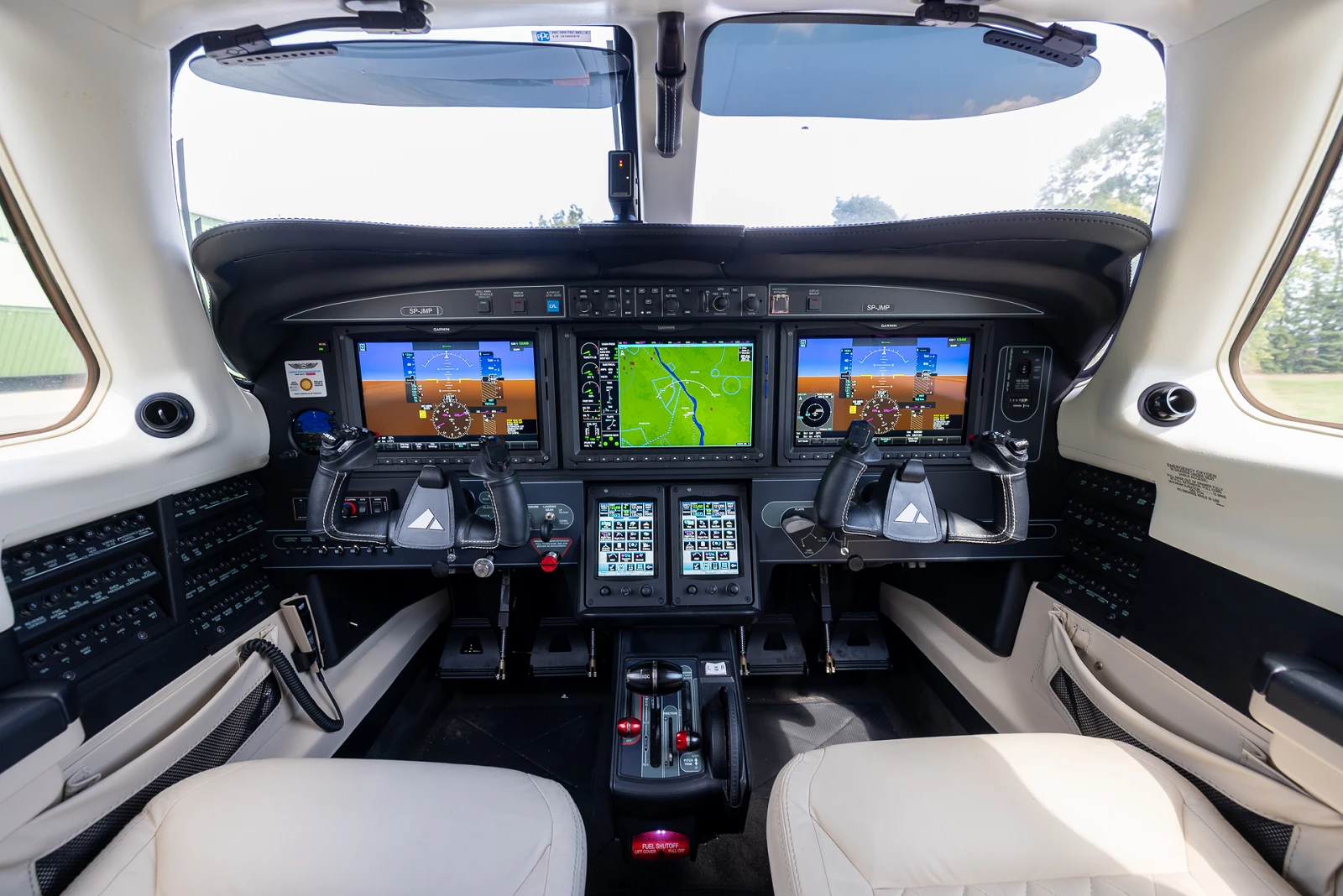
Access to the cockpit is similar to that in previous models—that is, between the seats through the cabin. Getting in isn’t the easiest, but once we’re seated, we can feel truly comfortable. In front of us are the Garmin G3000 avionics and switches for controlling all engine and aircraft parameters. The cockpit layout is exactly the same as before. If you’ve flown the M600, training on the M700 will be a piece of cake.
In the air
Everything looks good on paper and in theory, so it’s time to test this plane in the air. We’re taking off from the JB Aviation & Aeroclub airfield (which also handled the sale of this particular aircraft) in Konstancin, near Warsaw—a grass airfield with an 800-meter runway. We taxi with almost no use of conventional brakes; instead, we use the “BETA” propeller mode, which acts like a large aerodynamic disc, and take our position at the threshold of Runway 30.
100% power and 700KM come to life, and we’re already taking off halfway down the runway—confirming what the co-pilot had mentioned earlier about the excellent takeoff run. We retract the landing gear and prepare for climb—looking at the cockpit and seeing a climb rate of over 2,000 ft/min on the display is impressive.
Although this aircraft is in the 300+ KTS class, it can still fly fairly slowly. Before reaching cruising altitude, we try flying slowly at 90 KTS with the flaps retracted—even though the controls are very light, the aircraft still handles correctly in the air. The Autothrottle system also helps us focus primarily on the aircraft itself rather than devoting all our attention to maintaining speed.
We adjust the Autothrottle settings to experience that speed I mentioned earlier, and in the blink of an eye we’re accelerating to 300 KTAS—this also brings a smile to my face, and thanks to that, we can easily cover the route from Warsaw to Gdańsk in 30–40 minutes. At this speed, IFR flights are essential—we usually can’t exceed 250 KTS below FL100, and above that, most countries have controlled airspace. Flying this type of aircraft with these parameters, IFR flying opens up many more possibilities—this is exactly how one should travel.
In the air, the autopilot handles most of the “work” for us, while we can focus on “operating” the aircraft and its onboard systems; flight comfort is maintained at a very high level, and the noise level in the cabin is really low. For flights above 14,000 ft, the system periodically checks the pilot’s responsiveness by monitoring blood oxygen levels—if there is no adequate response, the aircraft automatically activates the Autoland system and brings us back to the ground—this is a very helpful “just in case” feature for passengers.
We descend for landing and configure the aircraft; the engine in IDLE mode and the extended landing gear allow us to slow the aircraft down almost instantly—this is very useful when flying to commuter airports, where we need to maintain high speed on the approach for as long as possible. This time, we’re performing a visual approach, maintaining 95 kts on the turn and 85 kts on the final approach; to execute a short-field landing, we come to a stop after approximately 500 meters. The aircraft handles grass airfields well, but the propeller clearance is quite low, which means that on less level or mowed landing strips, the rotor may brush against some vegetation.
The M700 is a sensible and popular choice in the 6-seat turboprop aircraft class. Additional safety features, along with more power and better performance, are having a very positive impact on the evolution of the M-Class. See you in the air with even more M700s, racing through the skies like Furies!
Text and photos:Filip Modrzejewski


