
The World's Largest Air Shows - Oshkosh 2026

Virtually everyone in the aviation world has probably heard of the Oshkosh Air Show. This year, it took place July 20–26 and drew more than 700,000 visitors. Among them was Filip Modrzejewski, who gives us a look at this year’s event.
“Oh My God!”—that’s how, in true American style, I can sum up my first—and certainly not my last—EAA AirVenture Oshkosh. This year’s event was special because it coincided with the 250th anniversary of the United States of America. The number of airplanes, the impressive air shows, and the sheer number of people who are positively crazy about aviation are enough to make your head spin.
In his own plane
One of the best ways to get to Oshkosh is to fly in your own plane. While this is rare in Europe, in the U.S., the organizers officially invite pilots to fly in and even prefer this method over traveling by car. Participants can set up tents next to their planes and camp there, while enjoying first-hand access to the airshow grounds and the event.
For pilots, it’s also a perfect opportunity to meet other aviators—for example, during Oshkosh, I spoke with both a private owner of a Cessna 340 and high-ranking executives from one of the larger aviation companies, who also own a Mooney M20. Both flew in on their own planes and are sleeping in tents, blending right into the atmosphere of the event.
Before the air shows, the FAA publishes an official bulletin describing all the approach details, and pilots must have a printed copy on board. During the approach, the planes fly almost one after another; air traffic controllers identify them visually (e.g., the pink Piper), and instead of responding, the pilots wave their wings. Later, in parallel, we land on a designated section of the runway marked with colored dots, and we’re in Oshkosh. Everything happens very intensely, but also safely.
Every Day Is Different
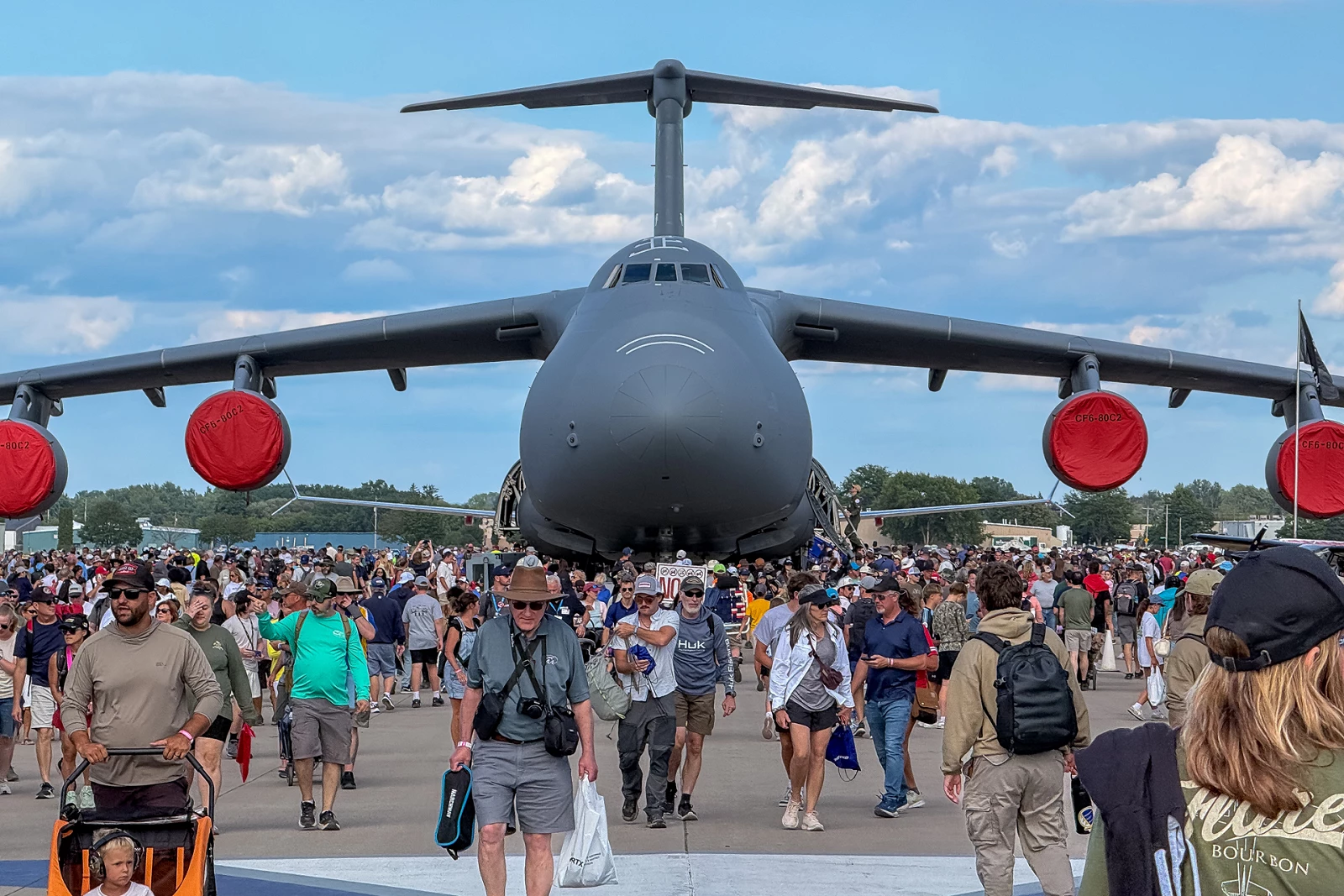
After landing (or arriving by car) in Oshkosh, it’s time to check out the static display. And I’m not just talking about the planes parked in the campgrounds—there are thousands of them. Boeing Plaza is the heart of EAA AirVenture, where you can see a variety of aircraft every day.
On Monday, visitors could admire a Boeing 777 belonging to the Arizona Cardinals football team; Wednesday was the day for the C-5 Galaxy and a Southwest B737 featuring a unique livery commemorating the 250th anniversary of the United States; and toward the end of the week, an American Airlines A321 took center stage, having brought war veterans here as part of the so-called Honor Flight. All of these aircraft arrived and departed at the beginning and end of the air shows so that as many visitors as possible could see them.
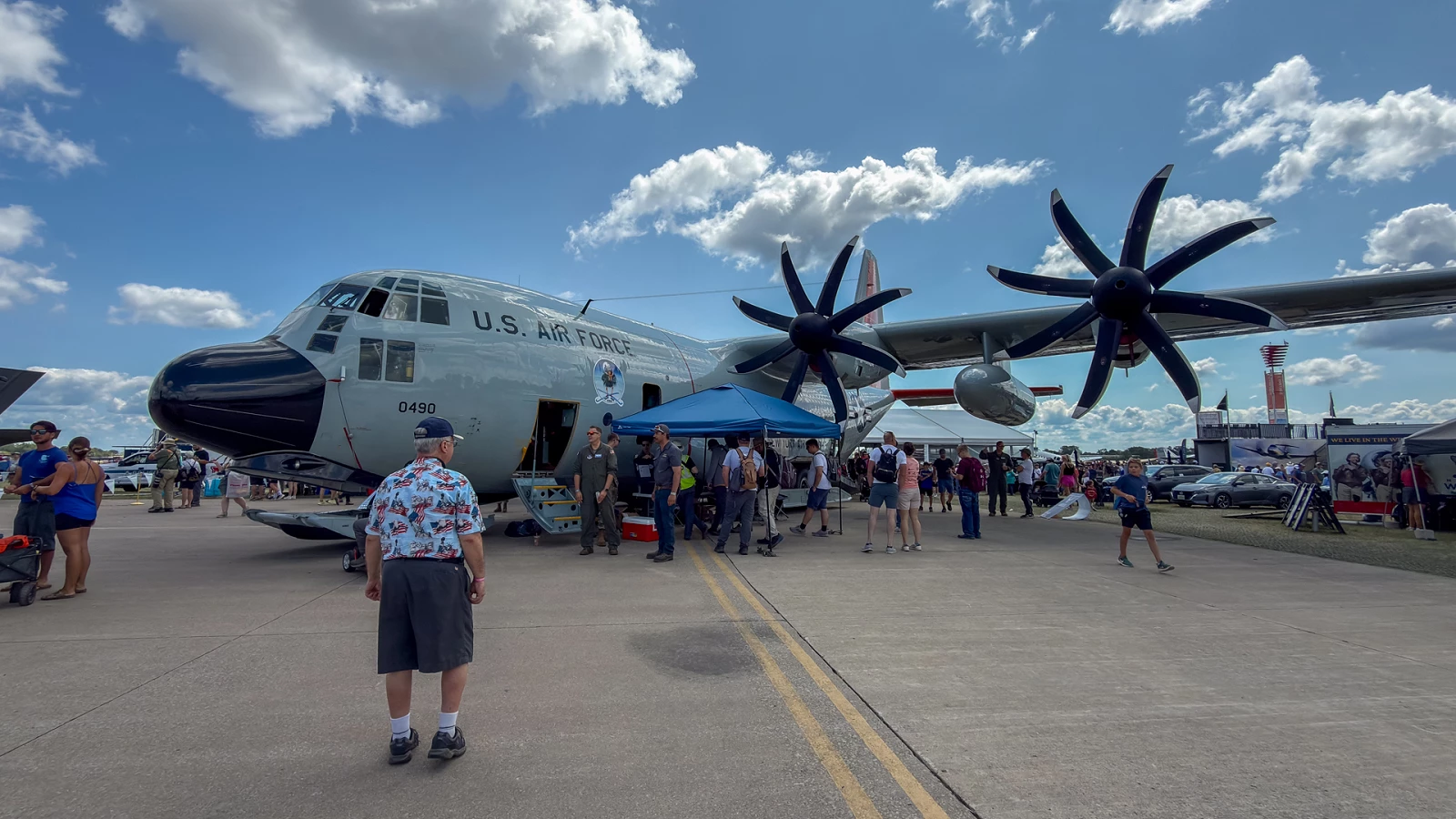
Additional arrivals and departures of smaller aircraft during the air shows are also a daily occurrence at Oshkosh. Changes to the static display—especially for aircraft participating in the air shows, with crowds gathered around—are handled very efficiently. For example, in the morning I watched two NASA F-15s in special livery circling overhead, and by the afternoon they had been replaced by the latest F-35s. All this with a minimal number of barriers and only a “look but don’t touch” sign—is that allowed? Yes, it is.
The air shows are also dynamic, with a different schedule each day. For example, on Monday, visitors could admire the dynamic F-16 Demo Team and historic P-51 aircraft; Tuesday was dedicated to aerobatic planes and other warbirds; and Friday featured displays by the U.S. Marine Corps’ F-35, the Red Arrows, and the Red Bull Air Force. Yes—to celebrate the 250th anniversary of the United States, Oshkosh was visited by leading teams from Europe—again, performing on different days.
When attending air shows in Europe, you may be used to a full schedule of air shows from morning to evening. At EAA Airventure, however, the air shows don’t start until the afternoon—the organizers want to ensure that visitors have the opportunity to explore the static display and all kinds of booths without having to compromise. The night shows also deserve special mention; this year, they were scheduled for two days (Wednesday and Saturday). Nighttime aircraft displays with fireworks, laser shows, 3D drone displays, and spectacular ground-based explosions captivated everyone’s attention. It’s also worth mentioning the night show by the Titan Aerobatic Team flying three AT-6 Texans with special aircraft lighting—both the sight and the sound are impressive,
Warbirds and vintage aircraft
While the central part of the event is dominated by the airplanes and booths at Boeing Plaza, there are plenty of other attractions all around. To the right is a dedicated area for Warbirds, and to the left is a dedicated area for vintage airplanes. You can explore both areas freely, talk to the pilots, and admire the aircraft. In both areas, you can also sign up for a guided tour called “Warbird / Vintage in Review,” where a dedicated volunteer tells you about the aircraft on display in that area, along with interesting facts—it’s a great way to learn more.
What warbird aircraft were on display? A wide variety of aircraft that aviation enthusiasts know from history and numerous films—iconic designs not only from World War II but also from later periods. And all of them were fully airworthy—it is precisely this aspect that makes them even more special. Various versions of the P-51 Mustang, the Boeing B-29 Superfortress, the B-25 Mitchell, Thunderbolts, Corsairs, and the B-17 Flying Fortress. One could go on and on listing them, admiring them, and talking with the pilots of these aircraft about their history, maintenance, or how they’re flown—this aspect also creates a very special atmosphere. I can safely say that one day might not be enough to thoroughly explore all of these aircraft.
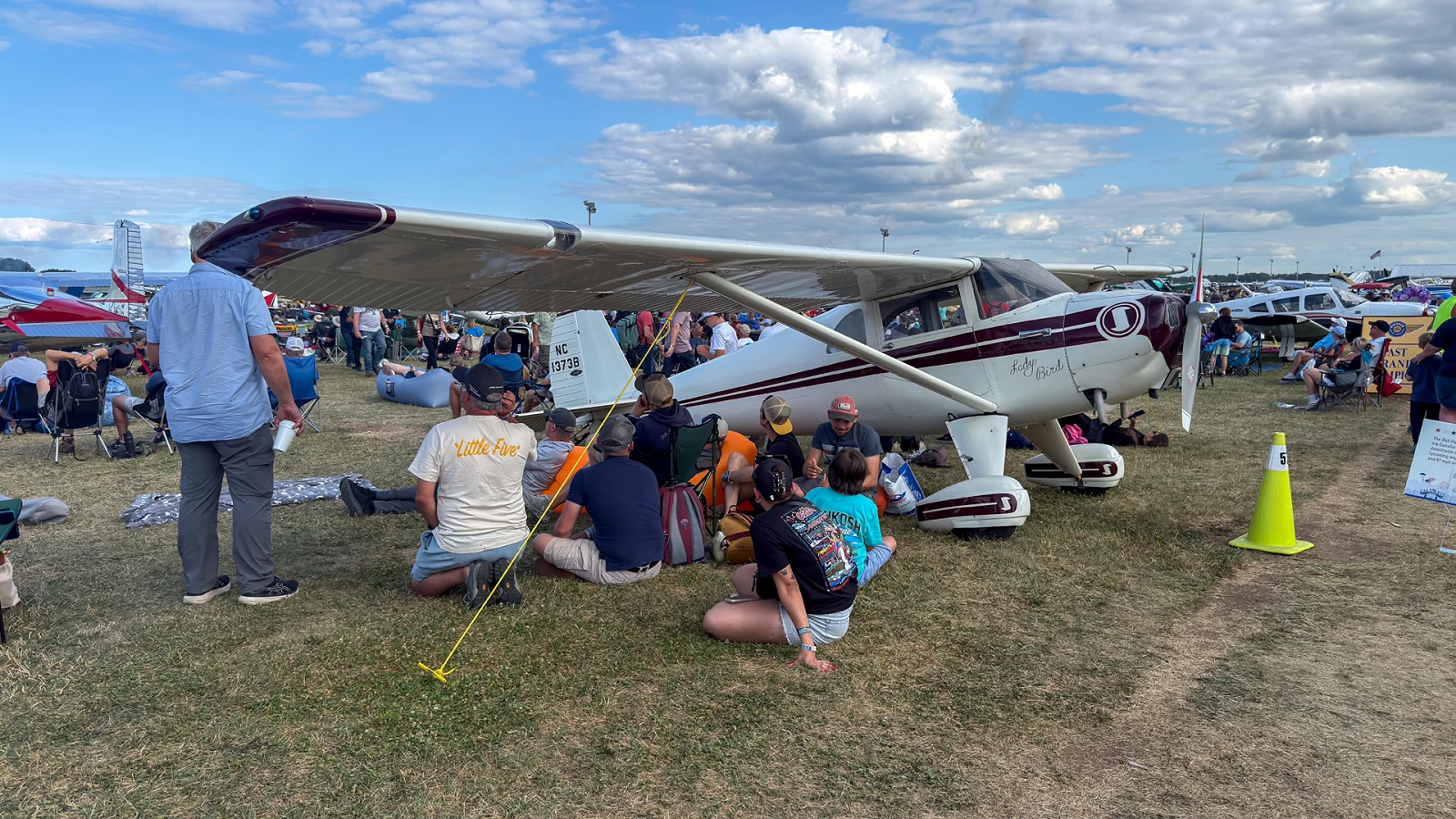
The vintage section was just as impressive and diverse—it had been a long time since I’d seen so many older, well-maintained aircraft in one place. A Piper Comanche, a Beechcraft B18, and Bonanzas over 50 years old, a Cessna 185, a Ford Trimotor, and historic seaplanes. On top of that, the red “Red Barn” hangar—a nod to agricultural aviation—with a PA-18 Cub inside also adds to the atmosphere of the area. As I walked past these aircraft, I was very impressed by how well they were maintained, both on the outside and on the inside—airplanes like these really make you want to fly!
Twilight Flight Fest
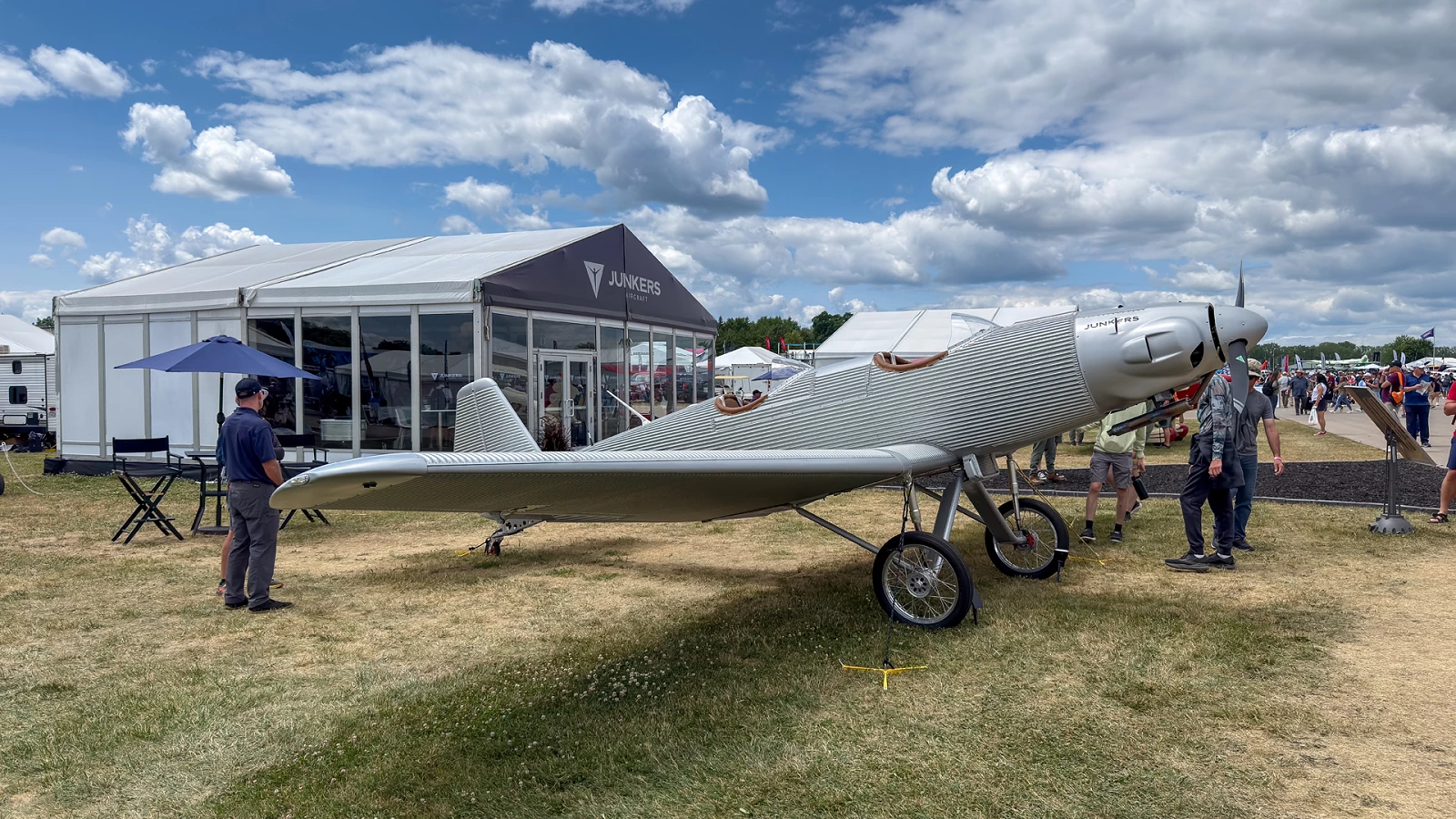
Even after the main (daytime) air shows wrap up, Oshkosh doesn’t slow down at all. One of the most interesting evening events is the Twilight Flight Fest, held in a completely different part of the airfield—the Fun Fly Zone, an area dedicated to ultralights, light aircraft, gyroplanes, and STOL aircraft. It is here that the distinctive, approximately 270-meter-long grass runway is located. On days without night shows, starting at 8:00 p.m., this spot transforms into a stage for a series of demonstrations focusing on less traditional forms of aviation.
The evening kicks off with the EAA STOL Demonstration, during which highly modified bushplanes showcase their short takeoff and landing capabilities. In addition, there will be 3D RC displays, drone demonstrations, and other aircraft—such as eVTOLs and hot-air balloons—that we’re unlikely to see at major air shows.
Highlights of this year’s program include the Jetson One, a single-seat eVTOL, as well as performances by the U.S. Army Golden Knights and The Chuters. Twilight Flight Fest is, in a way, a sort of “second airshow,” but one focused on aviation that often doesn’t make it to the main stage. It’s also the venue for aviation competitions in precision and landing distance, which can be surprising when it comes to STOL aircraft. In the past, it was right here that the modified Wilga “Draco” version was unveiled. And the fact that we can stand practically right next to the runway underscores the informal, aviation-focused nature of this part of the event.
There’s no doubt that EAA AirVenture Oshkosh is one of the most extensive aviation events, and it’s no surprise that so many thousands of visitors from around the world gather there. All that’s left for us to say is: See you in 2027 at the end of July!
Text and photos:Filip Modrzejewski


