
France for the Weekend

Flying around Europe has many advantages—not only can you see new places and explore new airports, but you can also enjoy a weekend in picturesque locations. Filip Modrzejewski takes us aboard a PA46 Malibu Mirage on a flight to Tours Val de Loire in France.
Everyone has a different reason for flying—for some, it’s just a job; for others, a way to get from A to B; and for still others, a form of entertainment. Each of these reasons is equally valid. In my case, flying is not only a combination of transportation and entertainment, but also my biggest hobby, which I try to share with others—as was the case when my college friends and I went on a weekend trip to France.
Flying in winter isn’t exactly easy, mainly because of the unpredictable weather and low temperatures (especially at higher altitudes), which can lead to icing. Of course, you can wait for ideal VFR conditions, but if you want to be less dependent on the weather, you need an aircraft that won’t let you down in such situations or that will allow you to fly “above” the weather. The perfect aircraft for this task is…
Piper PA46 Malibu Mirage
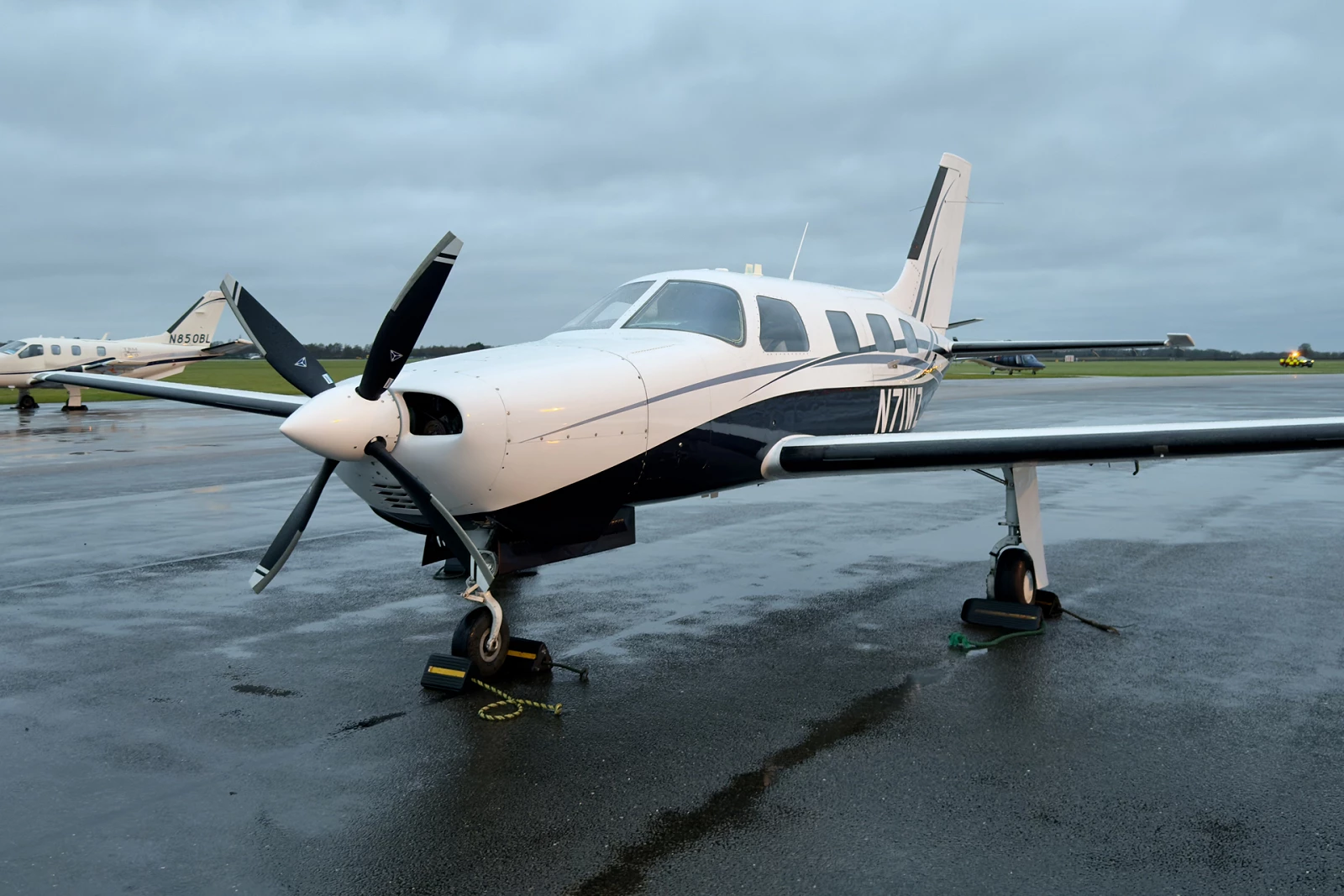
This is an older version of the Piper M350, which still performs great. A pressurized cabin, a cruising ceiling of FL250, a cruising speed of 200 KTAS, weather radar, a de-icing system, 6 seats on board… these are the conditions for flying! It is one of the few piston-engine aircraft that boasts all these features in a single design—popular among private owners, yet almost unheard of at flight schools or flying clubs. With access to such an aircraft based at Oxford Airport (EGTK—United Kingdom), it’s a great option for long-distance travel or flights, not just in winter.
The cockpit is quite well-equipped—a classic “six-pack” in front of the pilot, integrated with Garmin GTN 650 and GTN 750 navigation systems and an S-TEC 55 autopilot, allows for comfortable IFR flying. For passengers in the rear, there are four seats in a “club” configuration (facing each other), as well as ample luggage space in the rear and even a pull-out table. Electric heating comes in handy on cooler days, and the air conditioning is very useful in the summer.
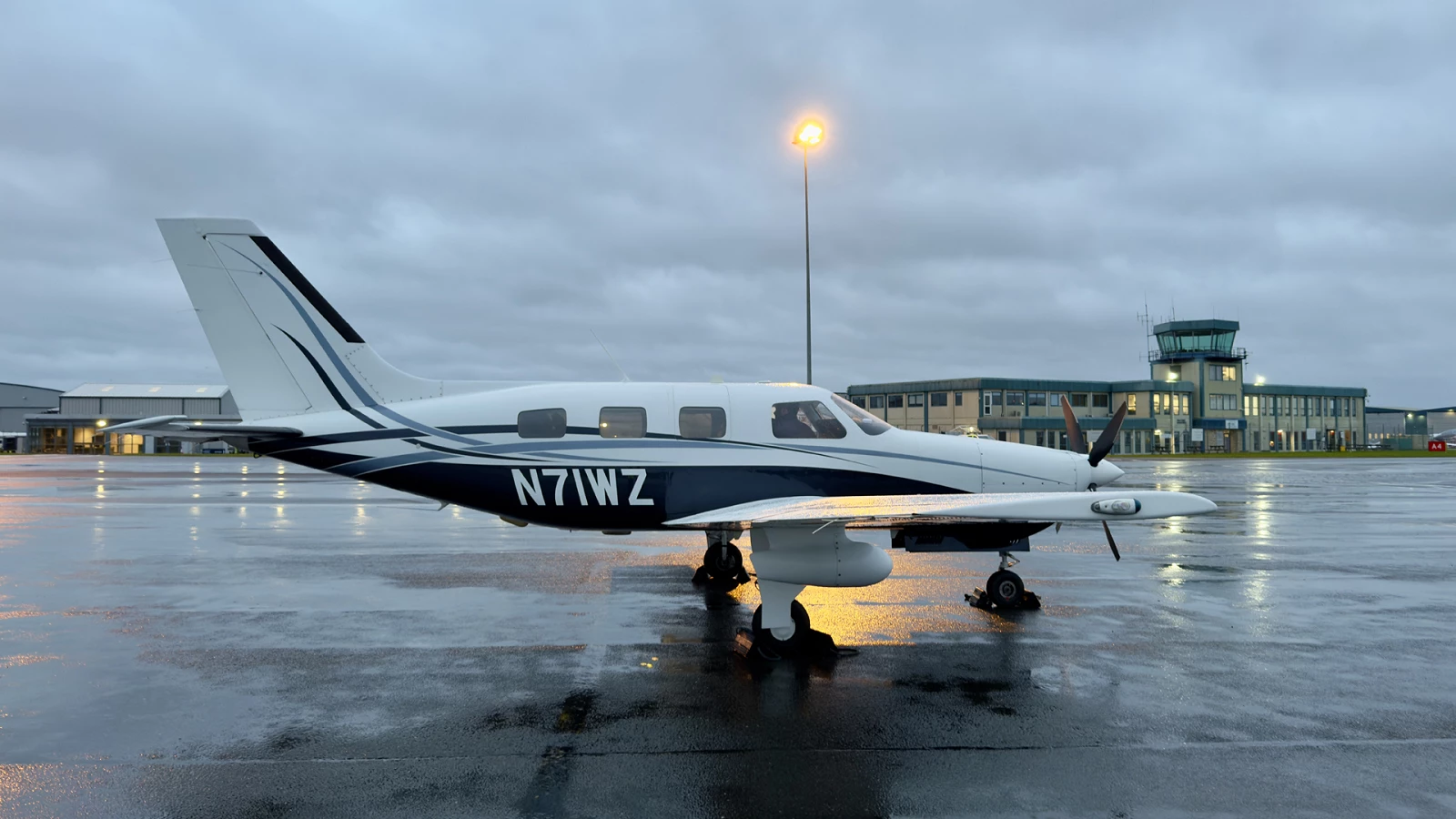
The aircraft in question is registered in the U.S. under the registration number N71WZ. With a UK CAA or EASA license, we could fly it legally only in the country where the license was issued; if we want to fly an N-reg aircraft without restrictions, we need an FAA license—fortunately, obtaining one up to the PPL + IR level is not difficult. So now is the time to put those qualifications to use!
Pre-flight
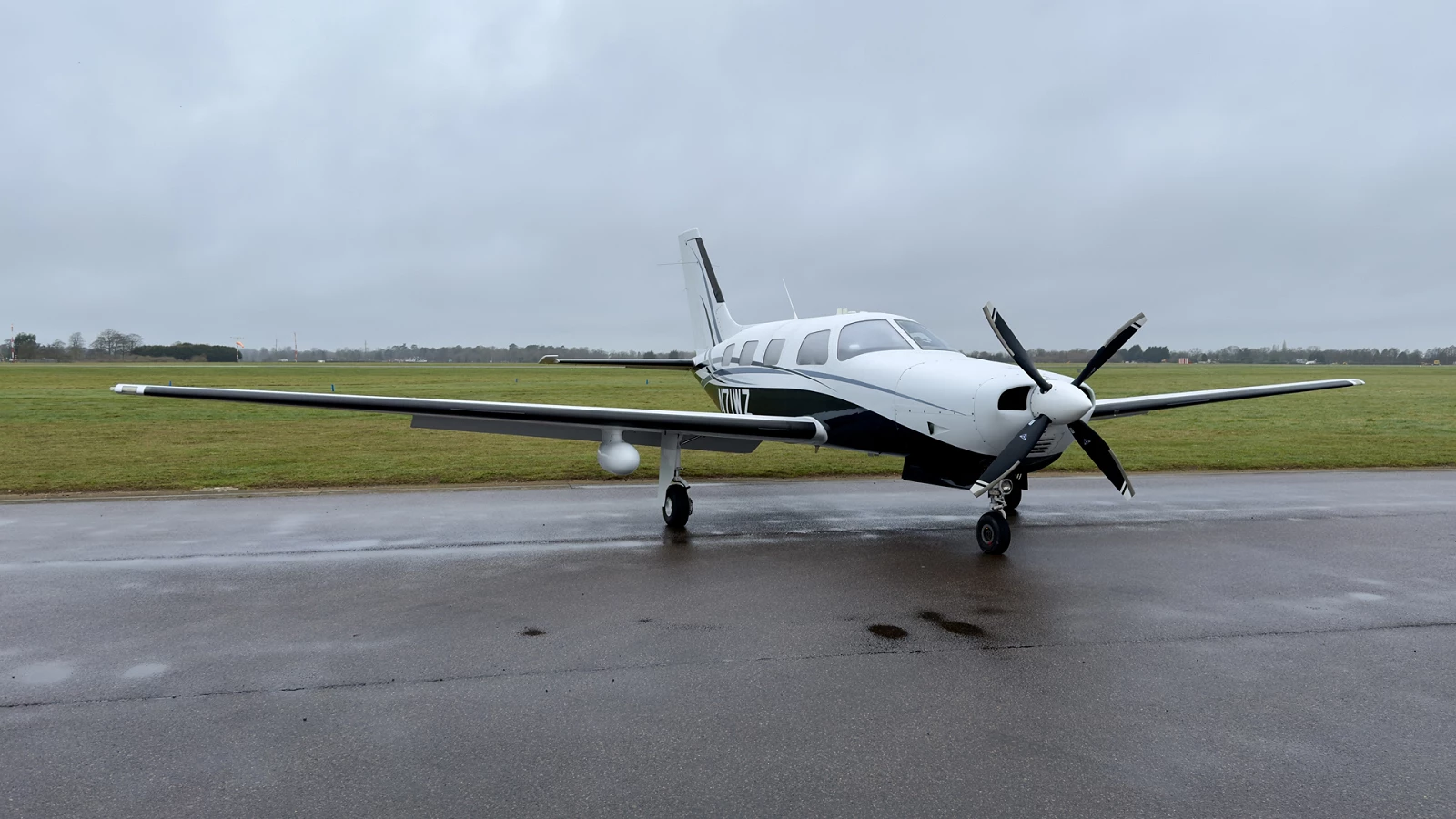
Earlier this week, I called a couple of friends from college to ask if they had plans for the weekend and if they’d like to fly to France with me. It was a rhetorical question, so of course they said yes. We quickly made arrangements, and a few days later, on Saturday morning, we met at the Oxford airport.
The weather wasn’t spectacular, but it was good enough for a safe flight—clouds starting at 800 ft, moderate wind, no rain, a temperature of 6°C, but no forecast of icing (and as it turned out later, that forecast was correct). I’m preparing the plane for flight by, among other things, checking all systems and the airframe on the ground, topping off the fuel and oil, and preparing headphones and life jackets for myself and my passengers (incidentally, we’ll be flying over water for over half an hour).
We had arranged the PPR (Prior Permission Required) with the destination airport a few days earlier and sent all the necessary information to both the British and French border authorities—flying after Brexit is still relatively easy, but we have to carry our passports and fill out a few additional forms online. In this case, both the PPR and other arrangements were coordinated through the destination airport’s MyHandling system—a very convenient tool.
Let's go
The flight plan is filed and ready, so we can take our seats in the cockpit, listen to the ATIS, and request takeoff clearance. The 350 horsepower engine roars to life in an instant, and the four-bladed propeller looks very majestic through the front cowl, clearly outlining the aircraft’s nose. While taxiing, I let one of the passengers take the controls so they can see firsthand how it all works.
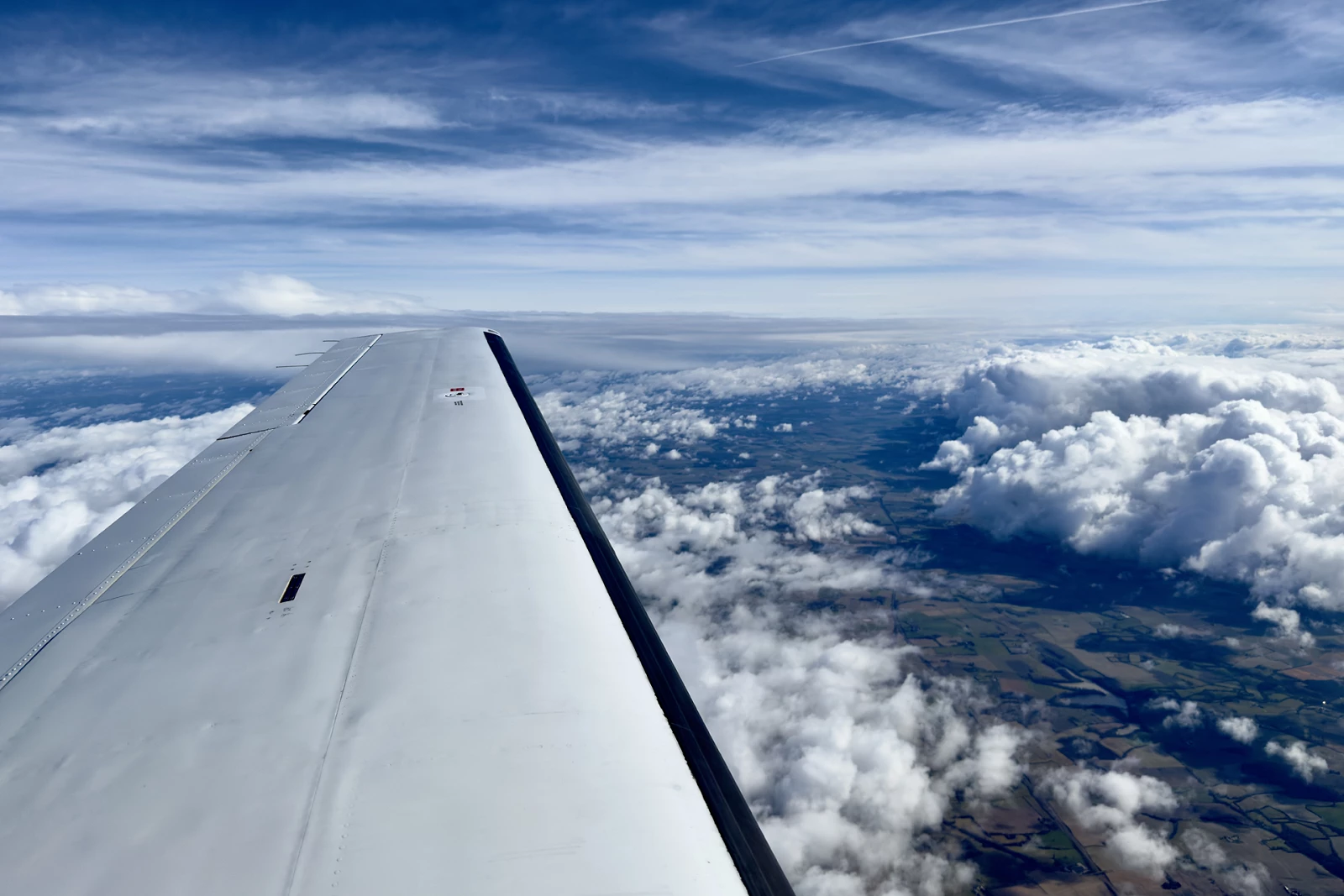
Today’s departure clearance is quite simple—after takeoff, climb to 5,000 ft almost in a straight line to waypoint KENET, including crossing the Brize CTA military control zone—all coordinated by ATC in Oxford. The aircraft is climbing very well, smoothly maintaining 1,000 feet per minute at a speed of 125 KIAS. The clouds, which looked quite dense, turned out to be many thin layers at different altitudes—while we don’t have a blue sky, we also don’t have icing or turbulence, and we can make out the different layers outside the window.
As we approach the KENET waypoint, ATC transfers us to London Control, which clears us for entry into Class A airspace and slightly adjusts our route, directing us to the GWC (Goodwood)—this will add perhaps 1 minute to our flight time, so considering some reroutes in London that can extend the flight by nearly an hour, that’s a good result.
We cross the border into France at the DRAKE waypoint and are handed over to the French ATC, Rennes Approach. Anyone who has flown in France knows that the French accent can sometimes make it difficult to fully understand the route or specific waypoints, but after a brief discussion, we manage to negotiate a direct flight to waypoint VANAD, which is located about 25 NM along the extension of the destination airport’s runway. This will make our subsequent vectoring for landing easier.
The weather is deteriorating slightly, and we’re now flying in what’s called “soup”—complete cloud cover—so it’s time to focus solely on the instruments in the cockpit. It’s –13°C outside, but despite that, we don’t see any ice on the wings. Everything is going smoothly, and after another 15 minutes, the clouds begin to thin out, and we’re finally treated to a beautiful blue sky, which, combined with a ground speed of 200 KTS, puts a smile on everyone’s face on board.
We descend using retractable aerodynamic brakes, which allow us to achieve a higher descent rate without exceeding VNE. In Tours, we land on Runway 20 using the RNP procedure and without the autopilot, to practice our skills.
Tours in the Loire Valley - LFOT
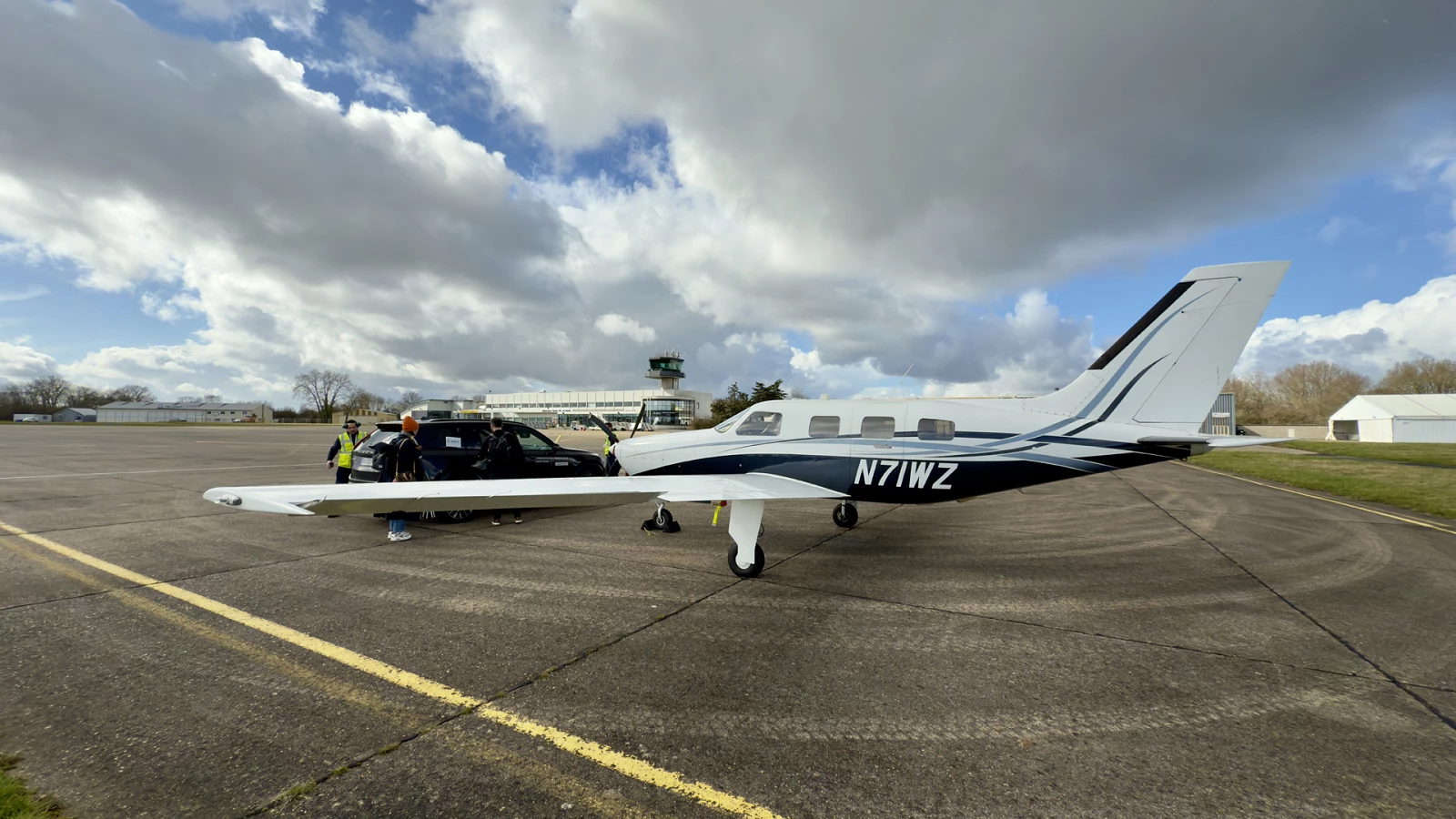
After landing, AFIS directs us to a parking spot; we come to a stop practically right in front of the main terminal, from which airlines such as Ryanair also operate several times a day. It’s worth noting that LFOT has either AFIS or ATC depending on the time of day—detailed hours are provided in NOTAMs.
Having flown through many airports in Europe, I’ve experienced a wide variety of situations, but the airport in Tours deserves a 5-star rating. Immediately after landing, a car arrived to pick us up and take us to the private terminal, where we completed the formalities with Customs (Douanes in France). Every member of the ground crew was smiling the entire time, and English was no problem for them at all. As it turned out later, many of them are also pilots at the local flying club.
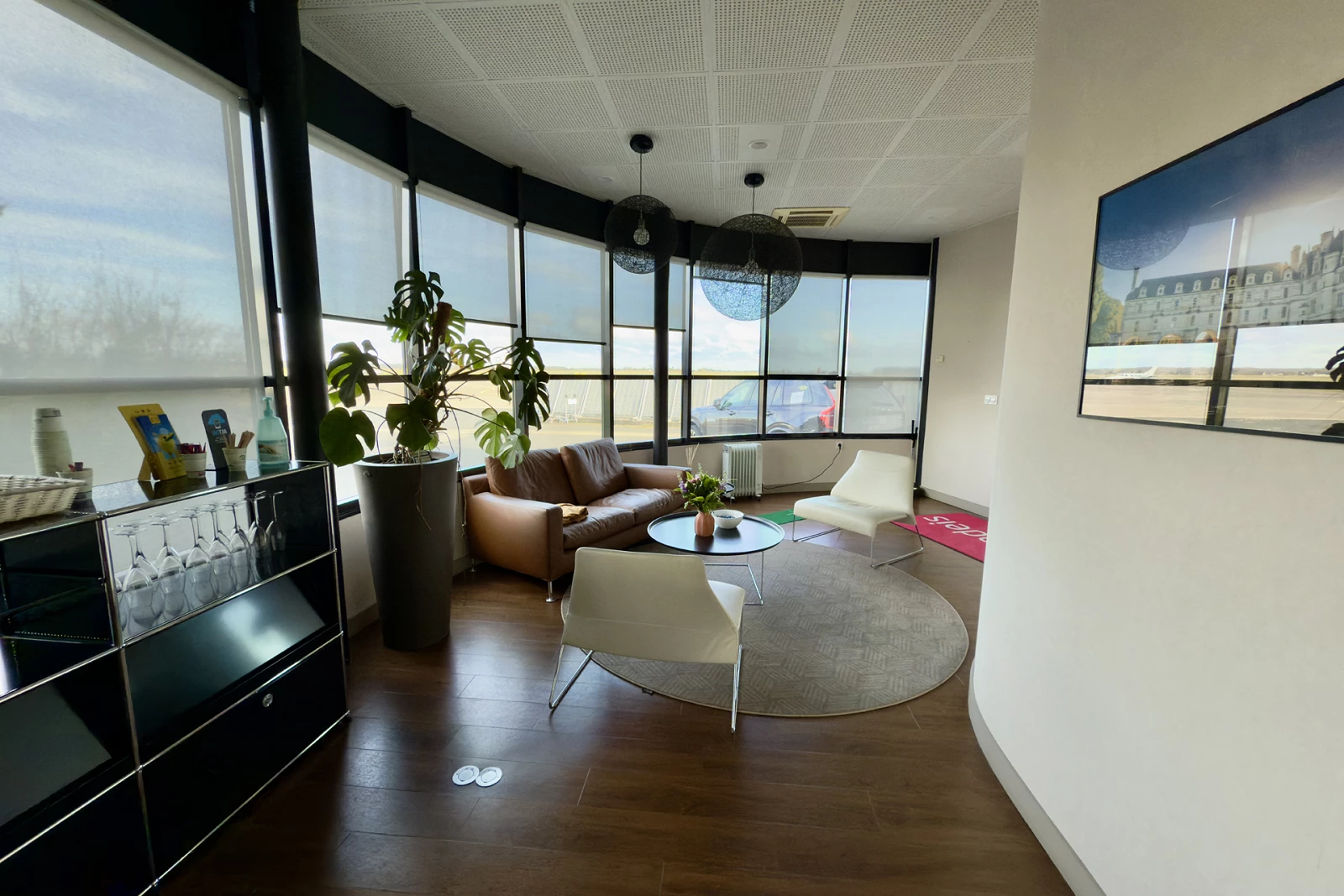
While waiting in the terminal, we have access to a dedicated business lounge with comfortable sofas, snacks, and drinks—and even a mini-golf course—to make the wait more enjoyable, and everyone is very helpful. Ground handling for aircraft under 3 metric tons is free, and the total cost of the visit was 50 EUR (parking and landing)—considering everything that was available to us, that’s a very reasonable price.
The Tours Airport is about a 15-minute drive from downtown, so it's relatively close. While air traffic is fairly light in the winter—except for the local flight schools—it gets really busy there in the summer; it's a popular spot, especially among French pilots.
A Windy Return
We’re staying in the city for the night, soaking up French culture and cuisine and enjoying the sunny weather—something that’s hard to come by on a daily basis in the UK. Checking the weather forecast for our return on Sunday, it doesn’t look promising—after all, it can’t always be too easy. Half the country is under yellow warnings for strong winds, and the TAF for Oxford suggests winds of 20 KTS with gusts up to 35 KTS, but perfectly aligned with the runway, so everything is within limits.
Before the flight, we select appropriate alternate airports and also brief the passengers that the approach and landing may be slightly turbulent, so that it doesn’t come as a surprise to them. We take off from Tours using the SID procedure VANAD1S, and then we’re cleared for an almost direct route all the way to the FIR boundary. The weather along the route is good; at FL80, we still haven’t encountered any clouds, so we can admire the views and the airports along the way where I’ve landed in the past—including Deauville (LFRG) and Le Havre Octeville (LFOH).
As we approach London’s airspace, we change frequencies and almost immediately fly into heavy rain and complete cloud cover—the United Kingdom certainly lives up to its reputation as a land of rain and wind. This came as no surprise to us, as we had been monitoring the weather ahead using weather radar, which proved very useful in this situation. Outside, the temperature was -1 °C with light icing, but it was so minimal that there was no point in activating the pneumatic ice-removal pads, as they would have had no effect.
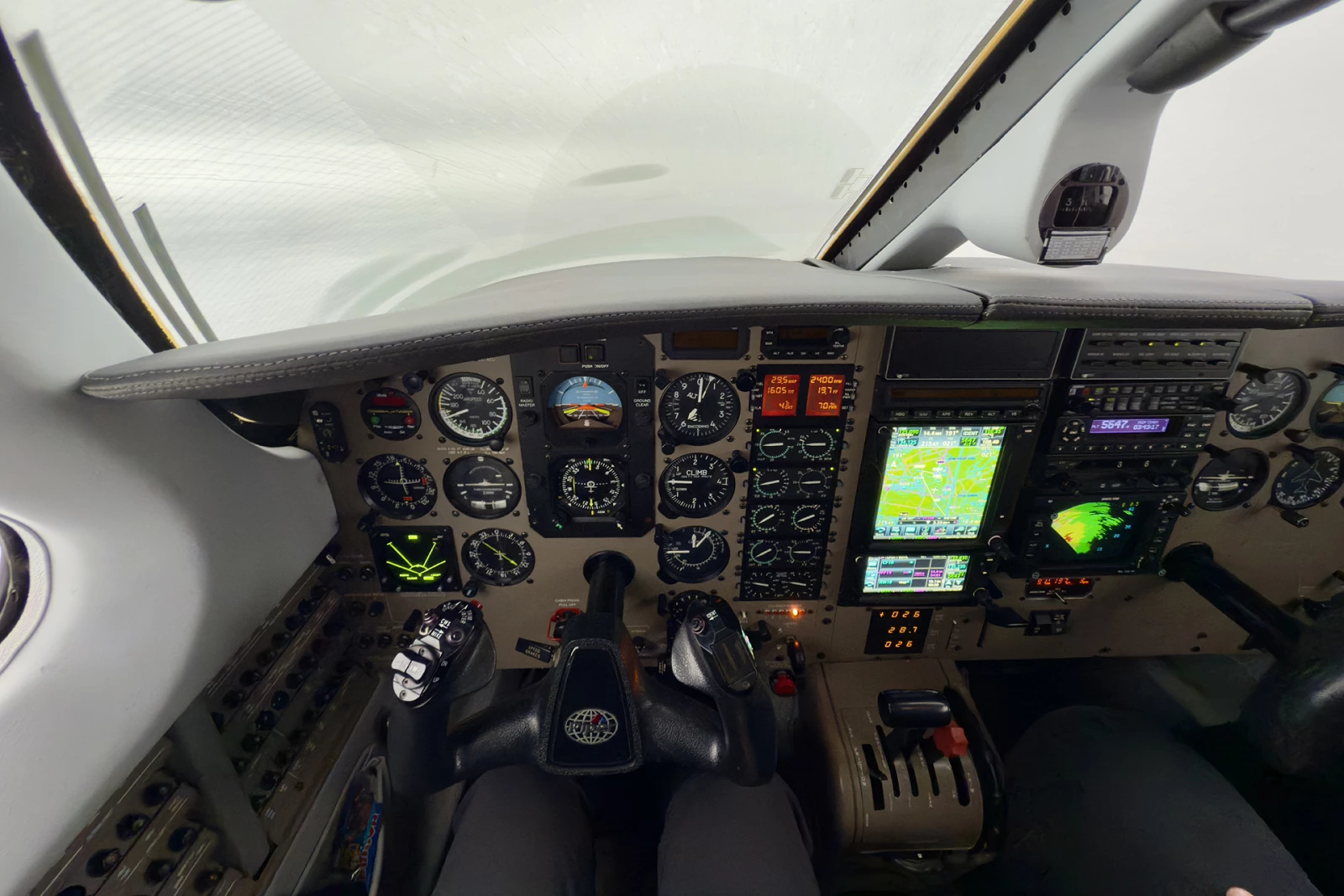
In London airspace, our initial route takes us to the MID (Midhurst) radio beacon, and then straight to Oxford. We initially descend to 6,000, exit Class A airspace, and Oxford Radar vectors us to the ILS approach for Runway 19.
The weather forecast was accurate—a wind speed of 22 KTS with gusts up to 32 KTS, but blowing in the same direction as the runway. Of course, I remember that this is ground speed, so I factor in a higher wind speed during the approach—as we intercepted the ILS glide path at 1,800, our speed read 100 KIAS, while the GPS showed a ground speed of 50 KTS, meaning a 50 KTS headwind—it was a slow and challenging approach, but everything went perfectly, and the passengers didn’t experience much discomfort either.
After landing, we leave the plane on the tarmac at Oxford Airport, while putting on all the necessary engine covers and pitot tubes and filling out the flight log. Flights like these are a great success—new destinations, quality time with friends, and new flying experiences. Here’s to many more like this in the future!
Text and photos:Filip Modrzejewski


