Douglas DC-3 – the aircraft that changed passenger flights
series - Machines that changed the sky
Douglas DC-3 – the aircraft that revolutionized passenger flights
In the history of technology, there is a small group of machines that not only were ahead of their time, but actually defined it. In the automotive industry, it was the Ford Model T; in architecture, it was the Eiffel Tower. In aviation, this honorable title undoubtedly belongs to one design. The Douglas DC-3 is not just another American passenger plane – it is a machine that made air travel no longer an expensive and dangerous adventure for daredevils, but a profitable business and a standard means of transport. In the 1930s, the DC-3 shortened the journey from New York to Los Angeles to about 15 hours of flight time, while the train journey at that time took more than 3 days.
How is it that a design from the 1930s still inspires admiration among pilots today, and its distinctive silhouette continues to appear in the sky?
Born out of necessity
The story of the DC-3 begins with... a phone call. In 1935, Cyrus Smith, president of American Airlines, called Donald Douglas with an unusual request. He needed an improved version of the DC-2 model – a larger, more comfortable aircraft capable of transcontinental night flights with sleeping accommodations (hence the original name of the project: DST – Douglas Sleeper Transport). The DST version offered fold-down sleeping berths and professional stewardess service, providing a standard of comfort comparable to that of hotels at the time.
The aviation market of the 1930s was ruthless. Airlines were teetering on the brink of bankruptcy, and their existence depended almost entirely on government contracts for mail transport. Passengers were just an afterthought—often a nuisance, freezing in noisy and cramped cabins. Douglas took on a challenge that would change this balance of power forever.
An engineering masterpiece
When the Douglas DC-3 took off for the first time on December 17, 1935, engineers knew they had created something special. It was an all-metal monoplane with a monocoque construction, which gave it unprecedented strength while maintaining a lightweight profile.
However, what gave it its advantage was hidden in the details. The use of retractable landing gear, flaps, and modern variable-pitch propellers allowed the DC-3 to reach a cruising speed of over 330 km/h. This was a huge leap forward compared to the canvas-covered biplanes that had dominated the skies just a decade earlier.
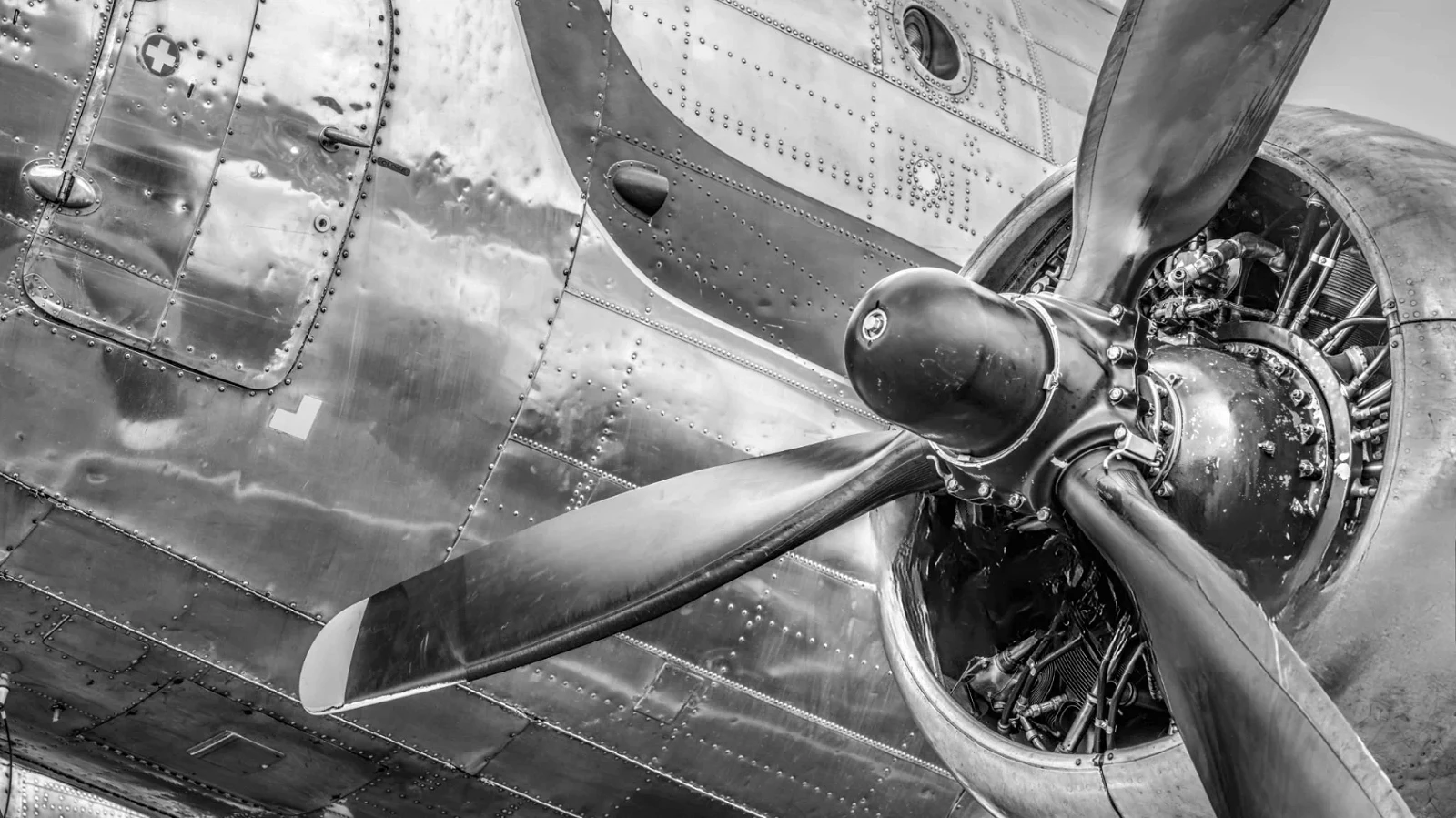
The engines were key to safety – powerful radial engines (initially Wright R-1820 Cyclones, later the legendary Pratt & Whitney Twin Wasps). They provided so much power that the Douglas DC-3 could safely take off and fly on one engine in the event of the other failing. At the time, this was a psychological breakthrough that convinced thousands of people to board the aircraft. To this day, the machine is considered by pilots to be one of the most forgiving designs in aviation history.
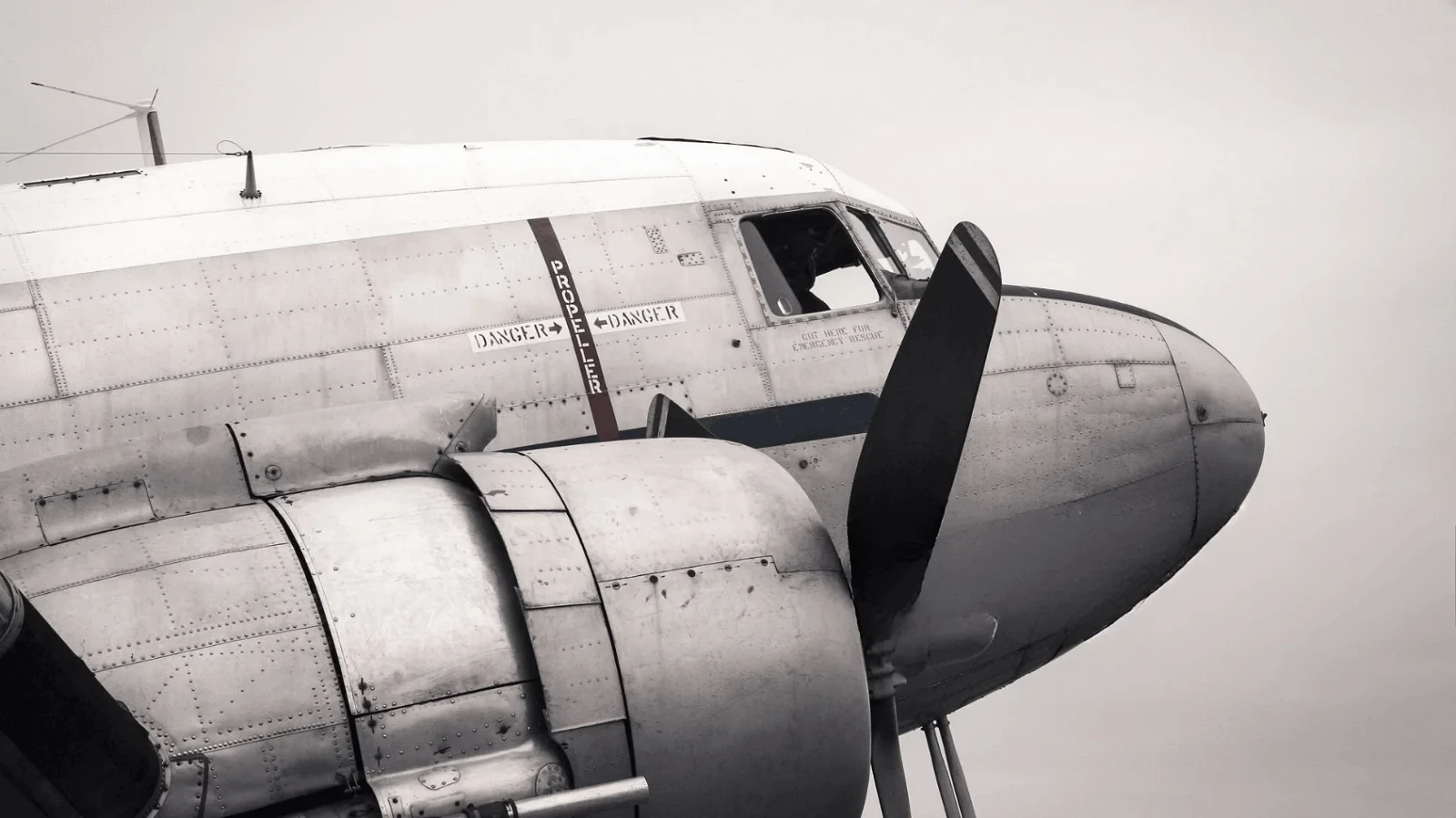
(military version known as C-47 Skytrain)
The first airplane that earned its own keep
It was not only technology, but also economics that made the DC-3 a legend. Before its arrival, aircraft operating costs were so high that passenger tickets covered only a fraction of the expenses. Airlines survived on postal subsidies.
An American passenger plane from Douglas changed this equation. Thanks to its wider fuselage, it could carry 21 passengers (or 14 in the sleeper version), which, combined with lower fuel consumption and higher speed, made passenger transport profitable in itself. It was a turning point. By 1939, more than 90% of all passenger traffic in the US was handled by these machines. The DC-3 was the first in history to "democratize" the skies, making tickets more accessible to the middle class.
C-47 Skytrain – an unwitting hero
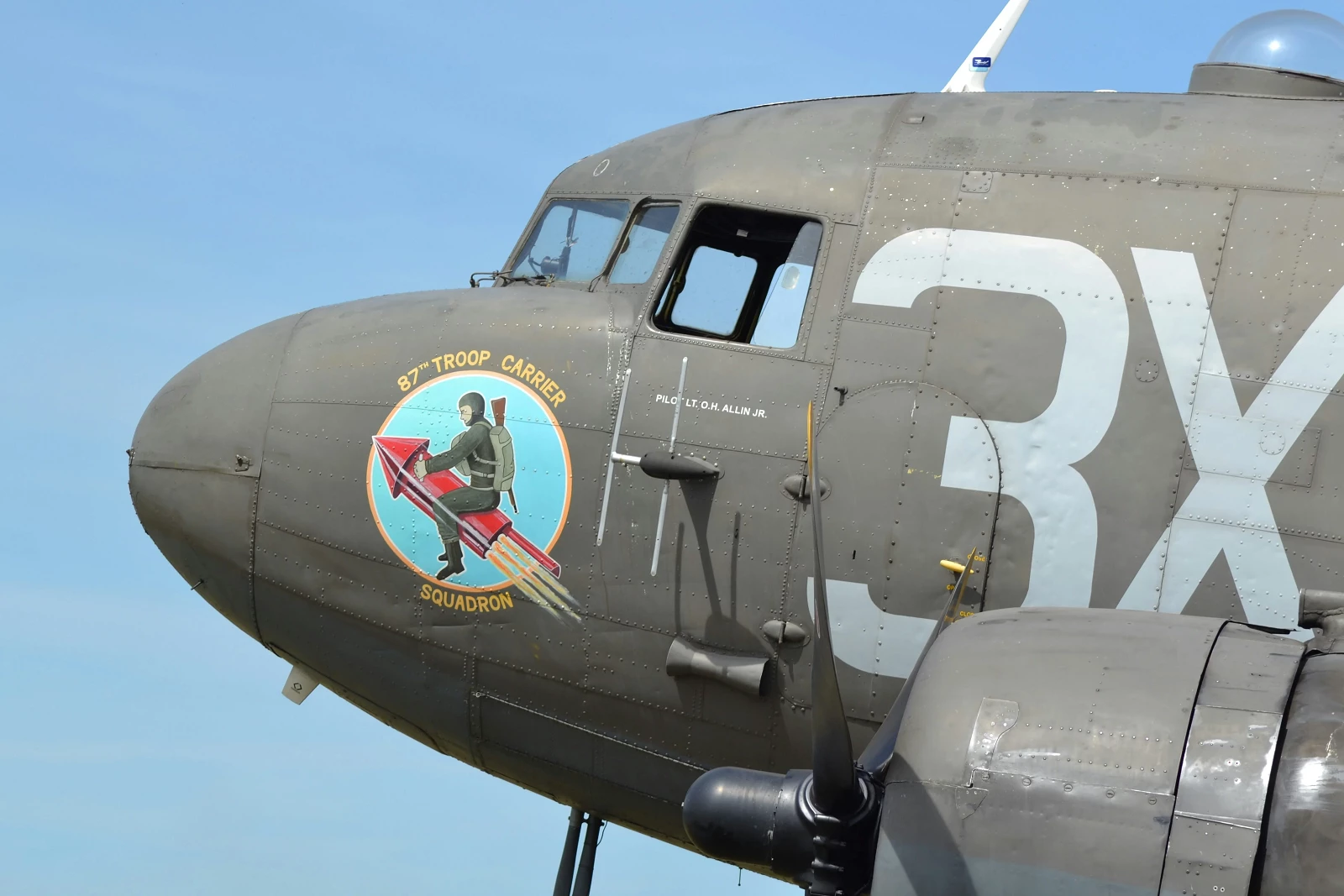
When World War II broke out, the DC-3's civilian career was suspended and all production was switched to military use. Under the military designation C-47 Skytrain (known as the "Dakota" in the British RAF), it became the workhorse of the Allies.
General Dwight Eisenhower, later President of the United States, listed the C-47 as one of four tools that won the war (alongside the Jeep, the Bazooka, and the atomic bomb). These machines dropped paratroopers in Normandy on D-Day, supplied cut-off troops in the jungles of Burma, and evacuated the wounded from the battlefields of Europe.
War production reached a dizzying pace – a total of over 16,000 units were produced in various military versions. It was this mass availability that flooded the market with thousands of cheap demobilized machines after 1945. This enabled the emergence of many new carriers and allowed pre-war national airlines, including Poland's LOT, to quickly rebuild their fleets and resume flights in a devastated Europe.
Immortal design
There is a famous saying in the world of aviation: "The only successor to the DC-3 is... another DC-3." Despite the passage of almost 90 years since its first flight, it can still be found in active service. It is estimated that there are over 100 airworthy examples remaining worldwide. Why are they still flying? Because no one has built anything else that combines such high load capacity, the ability to land on unpaved runways, and simplicity of maintenance. Some of them have already exceeded 80 years of continuous operation, which is an absolute phenomenon in commercial aviation.
Modern versions, such as the Basler BT-67, are actually refurbished Douglas airframes equipped with modern turboprop engines and digital avionics. They fly in Antarctica, in the jungles of Colombia, and in the Canadian north, where delicate, modern jets have no place.
Heritage
Looking at today's powerful Dreamliners and Airbuses, it's easy to forget their humble ancestor. However, it was the Douglas DC-3 that laid the foundation for modern air transport. It proved that flying could be safe, predictable, and—most importantly for the industry's development—profitable. This is not just a museum exhibit; it is still a living lesson in engineering, reminding us that solid construction stands the test of time more effectively than any fashionable technological novelty.
Interesting facts about the DOUGLAS DC-3 that will surprise even aviation enthusiasts
1. The aircraft that practically created modern airlines
When the DC-3 appeared in 1935, many airlines began to make money from passenger transport without government subsidies. Earlier aircraft often required subsidies or were supported mainly by mail transport.
2. Over 80 years in the air
The DC-3 is one of the longest-serving aircraft in history. Some examples are still flying, even though the design dates back to the 1930s.
3. The military version was even more famous.
During World War II, the military version of the DC-3 – the Douglas C-47 Skytrain – became one of the most important transport aircraft for the Allies. It was used, among other things, during the Normandy landings.
4. An airplane that can "land anywhere"
The DC-3 was capable of taking off and landing on very short and unpaved runways. This made it ideal for remote regions – from Alaska to the jungles of South America.
5. Nearly 17,000 copies produced
A total of approximately 16,000–17,000 units were produced (including military versions). It is one of the most widely produced large transport aircraft of its time.
6. He was also a legend in Poland.
After the war, DC-3s flew for LOT Polish Airlines under the designation Lisunov Li-2 (Soviet licensed version). They served the first post-war domestic routes.
7. Very comfortable for its time
In the 1930s, the DC-3 offered soft seats, heating, and a relatively quiet cabin. For many passengers, it was the first aircraft that could be flown comfortably even at night.
8. Pilots call it "indestructible."
In aviation circles, the DC-3 has a reputation for being exceptionally durable and predictable to fly. Many pilots say that it "forgives mistakes," which was one of the reasons for its enormous popularity.
JB Investments LLC (all rights reserved)
The photos are from the pixabay.com library—under the standard licensehttps://www.istockphoto.com/pl/help/licenses