The DA-50RG is making a big splash in Poland

The latest single-engine Diamond DA50RG was certified just over 6 years ago and is gaining increasing popularity. There are already 4 aircraft of this type registered in Poland—Jakub Śliwiński and Filip Modrzejewski take a closer look at one of them on the ground and in the air.
The Diamond DA50RG is an airplane that you definitely can’t pass by without noticing. With its 5-seat configuration, elegant finish, spacious cabin, and a wingspan of over 13 meters, it certainly turns heads at the airport. I couldn’t help but take notice of the Polish “fifties.” Especially since the first aircraft weren’t registered in Poland until September and October 2024.
Spacious and modern
I mentioned that the DA50 turns heads, and not just because of its various unique paint schemes. It’s a significantly larger aircraft, and its retractable landing gear and heated propeller lend it an air of dignity and grandeur on the ground. Incidentally, the cabin—with the crew up front and passengers in the back—has just as much space as the twin-engine DA62; there’s really plenty of room, and the structure is made of composite materials. The very spacious wings are also noteworthy—with a wingspan of nearly 13.5 meters!
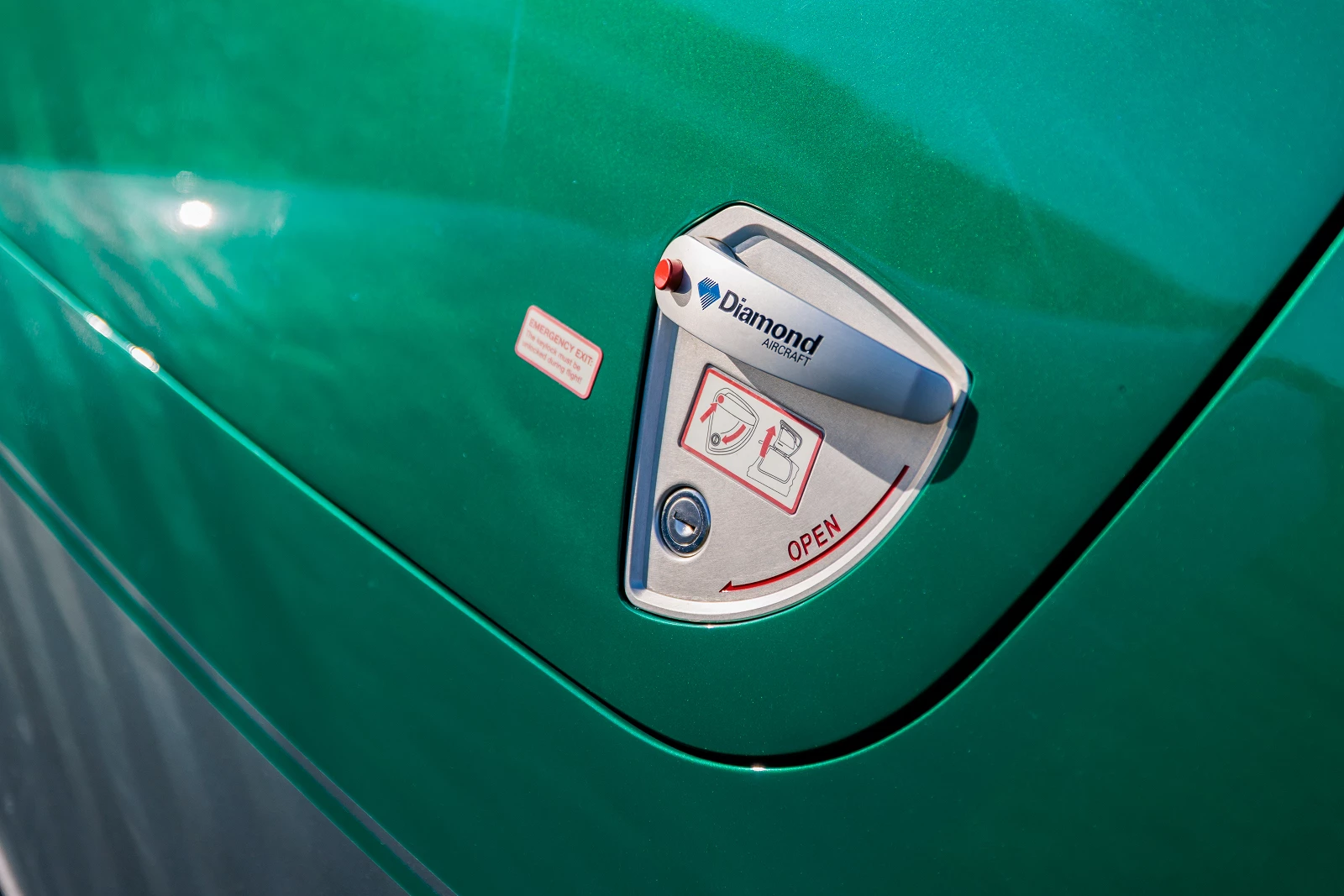
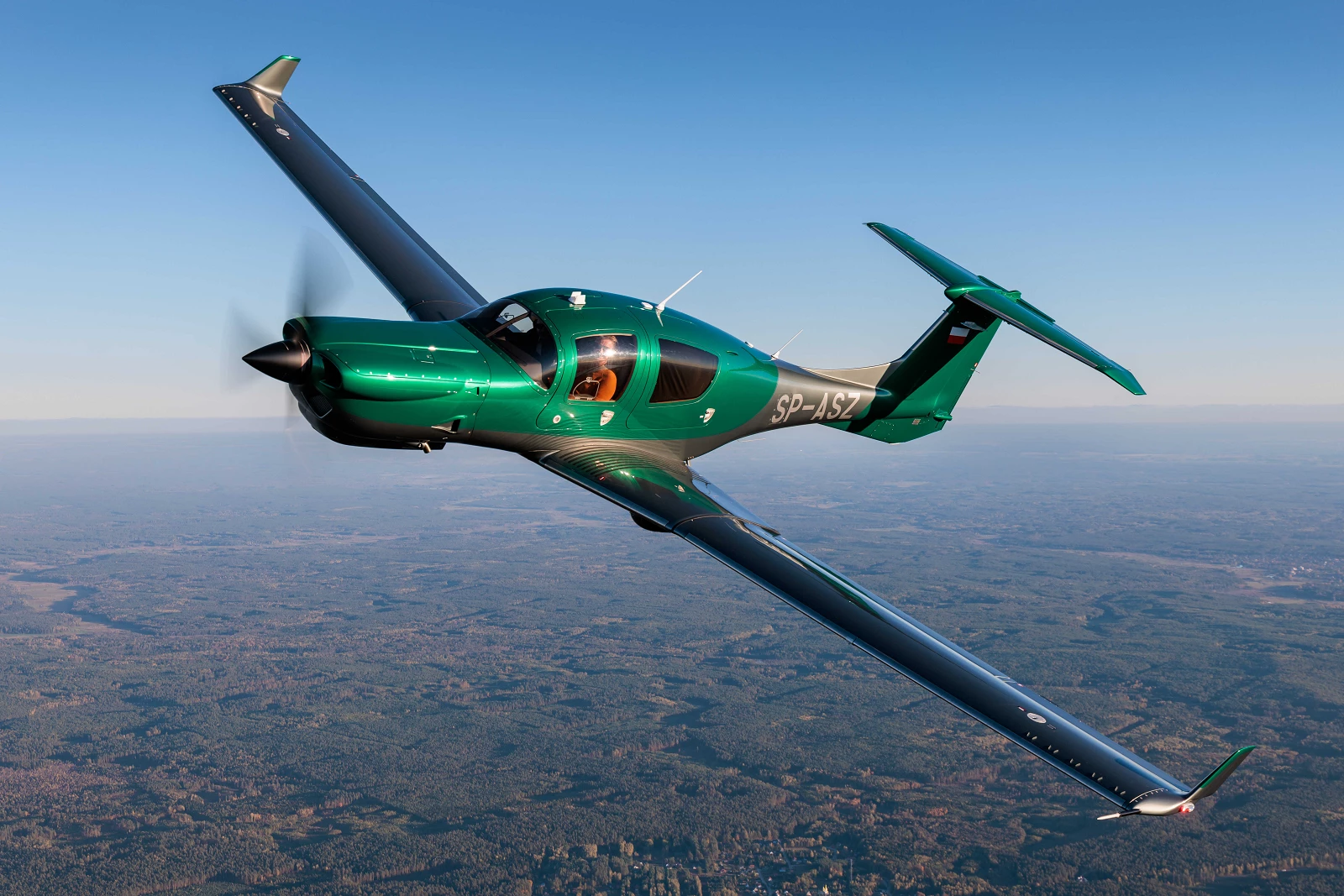
We meet the SP-ASZ aircraft at Krywlany Airport in Białystok; the DA50 can operate from both grass and concrete runways. The green-and-silver paint scheme is definitely unique and catches the eye. After meeting the owner, we take our seats in the cockpit, which we enter from the rear of the plane. As is typical with single-engine Diamonds, there are three pairs of doors—two in the front for the pilot and passenger, and an additional door behind the pilot’s seat for those in the rear. You can get inside easily by using the additional handles on the ceiling, so there’s no need to contort yourself.
There’s a generous amount of cargo space behind the rear seats—once again, a comparison to the DA62 comes to mind, as the cabin is very similar. The DA50 doesn’t have additional seats in the third row; instead, that space is dedicated to a huge luggage compartment that can easily hold several suitcases. When I spoke with the owner, he described flying this plane as comparable to “driving a large SUV—it’s spacious, comfortable, convenient, fast, and safe.” I have to admit that when I sat in the back for a moment to take a few photos, the seats were really comfortable, and there was much more legroom than in the DA40.
![DA50_20241016_5334.jpg [26.99 MB]](https://www.jbi.com.pl/storage/image/core_files/2024/12/23/01a4ce0c86d99c0bd05e46ea87c6111f/jpg/jbinvestments/preview/DA50_20241016_5334.webp)
In the cockpit
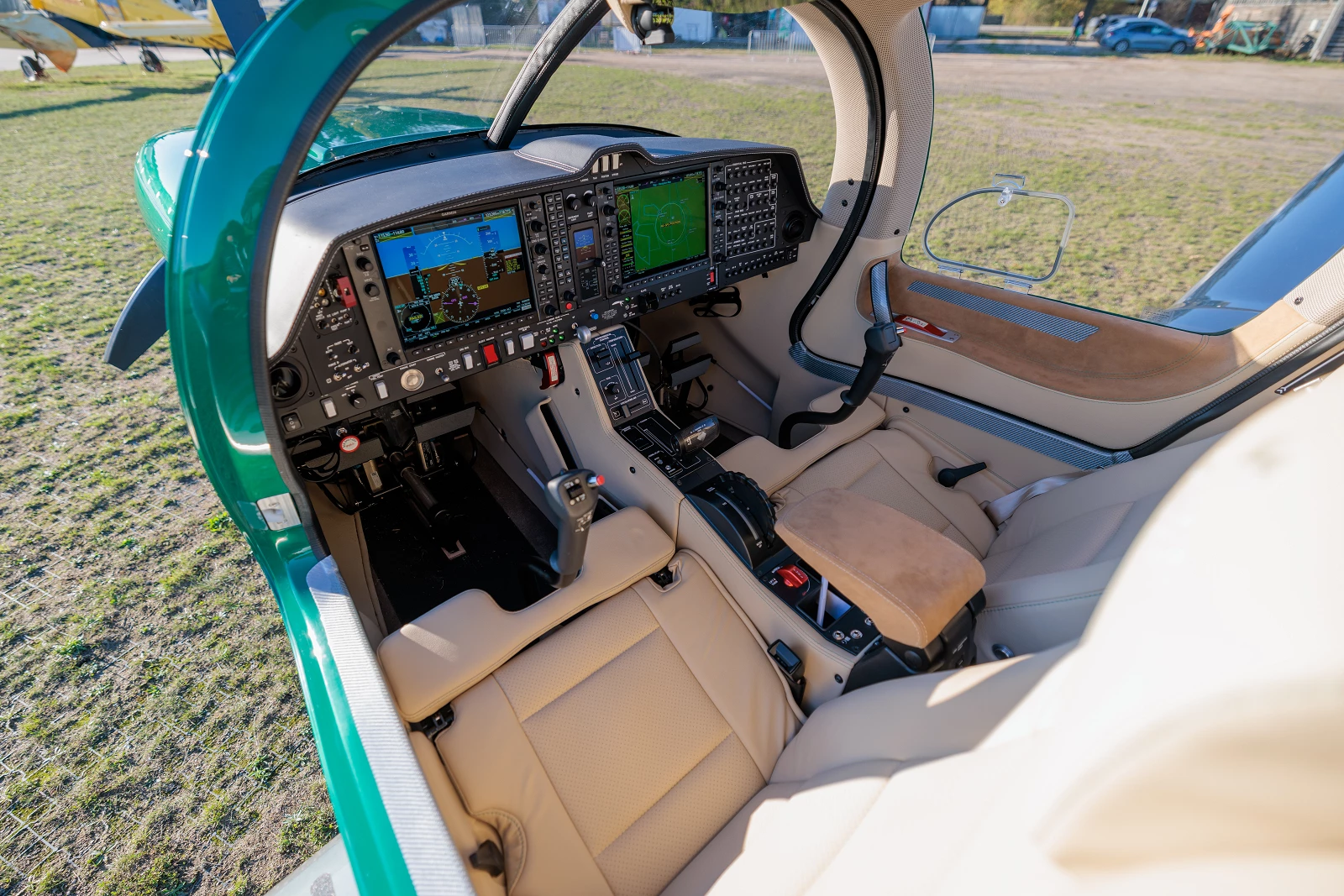
Moving to the front of the hull, I take my seat in the cockpit next to the owner. The seat is very comfortable, and the recline is adjustable—for taller people, the difference is noticeable. The electrically adjustable rudder pedals are worth noting here—there’s no need to bend down and adjust the cables; simply press a button to move them forward or backward. Additionally, there are built-in bottle holders to ensure easy access to drinks during the flight.
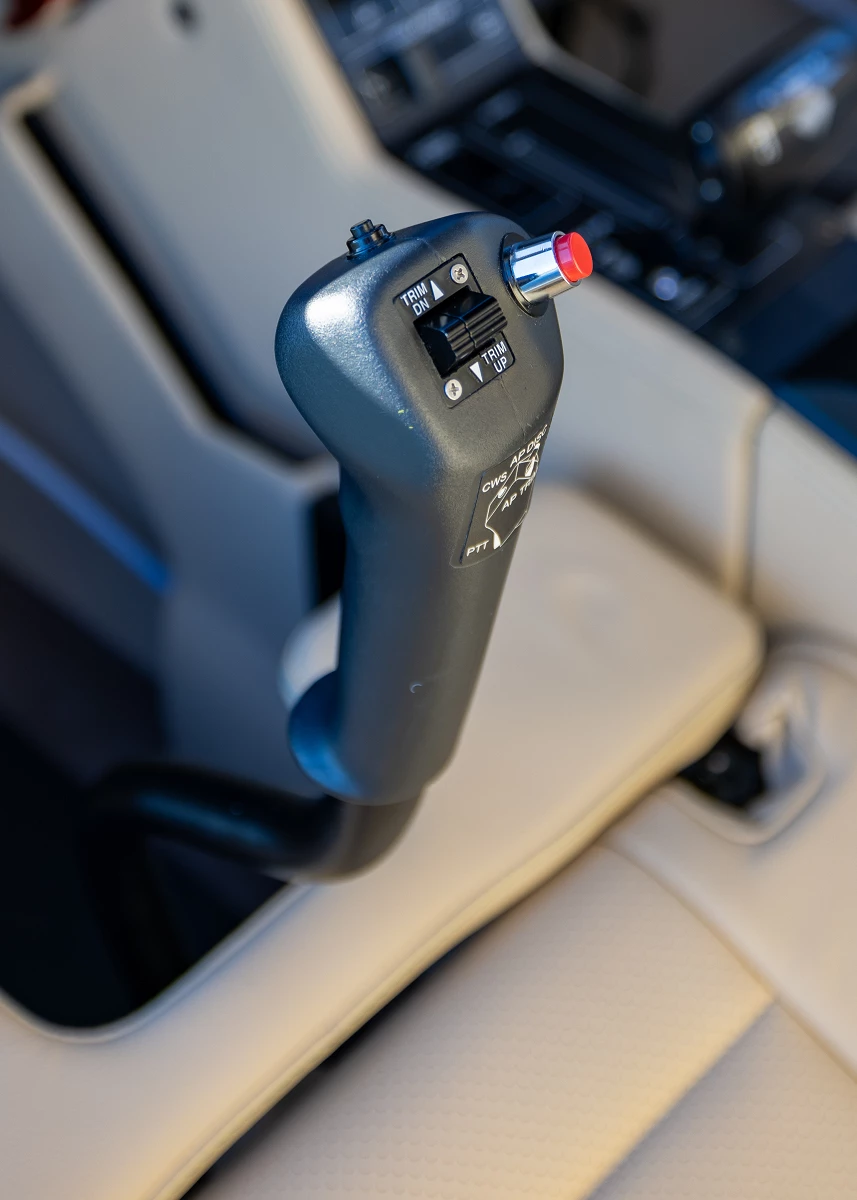
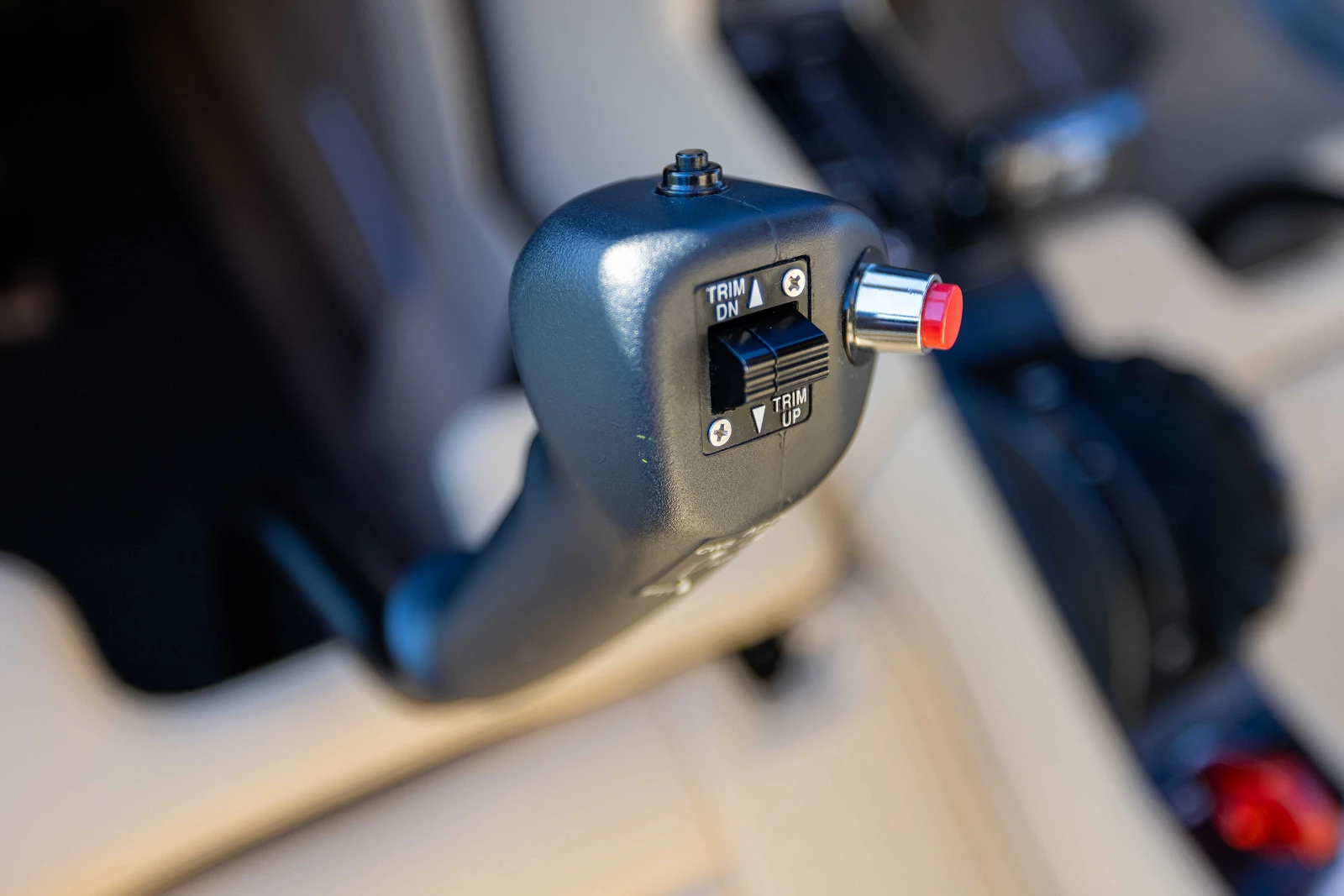
Another interesting feature is the optional armrest between the seats, which houses the Garmin GCU 476 keyboard, making it easier to program the glass cockpit. Another clever touch is the additional headphone hooks in the seat headrests—there’s no need to struggle with cables or toss your headphones onto the front of the cockpit. I’d also like to highlight the heating/cooling system, which features switches very similar to those in a car (temperature control, fan speed, and recirculation mode), as well as electric climate control. It’s also worth mentioning the larger control stick compared to the DA40. People with larger hands will certainly appreciate this.
The cockpit itself is designed very similarly to other Diamond models and is equipped with Garmin G1000NXi avionics and a GFC 700 autopilot. In the center are two backup instruments; to the right are the fuses, and to the left are the switches for the TKS system. Below the avionics, there are additional switches for power and engine control—everything is well-designed and within easy reach. As the owner says, “Diamond takes an engineering approach to the cockpit, giving the pilot a good mix of automation and manual switches. To me, this cockpit has a slightly military feel, and I find it more appealing than a fully digital system with just huge screens, like in other aircraft.”
![DA50_20241016_4856.jpg [20.53 MB]](https://www.jbi.com.pl/storage/image/core_files/2024/12/23/996c81a0456c508a2534cea40ba21dbf/jpg/jbinvestments/preview/DA50_20241016_4856.webp)
JET-A1, FADEC, and More
Controlling engine power is a breeze with a single lever—the aircraft is equipped with a full FADEC system that controls all engine parameters. Our job is simply to set the desired power percentage—that’s it. There’s no need to adjust the propeller RPM or the air-fuel mixture—when flying this aircraft for the first time, you might be surprised at how little there is to do regarding the engine, especially if you’re used to putting in much more effort to set the right temperatures and parameters.
Thanks to the FADEC system, this aircraft does not have traditional ignition coils, and takeoff is initiated with the push of a single button. An engine check involves verifying parameters during a system test (by holding down the designated button for about 10 seconds) and checking the backup FADEC system. This not only saves a significant amount of time but also simplifies the pilot’s operations, which is particularly useful at large airports, where pilots must pay attention to many things while taxiing and taking off.
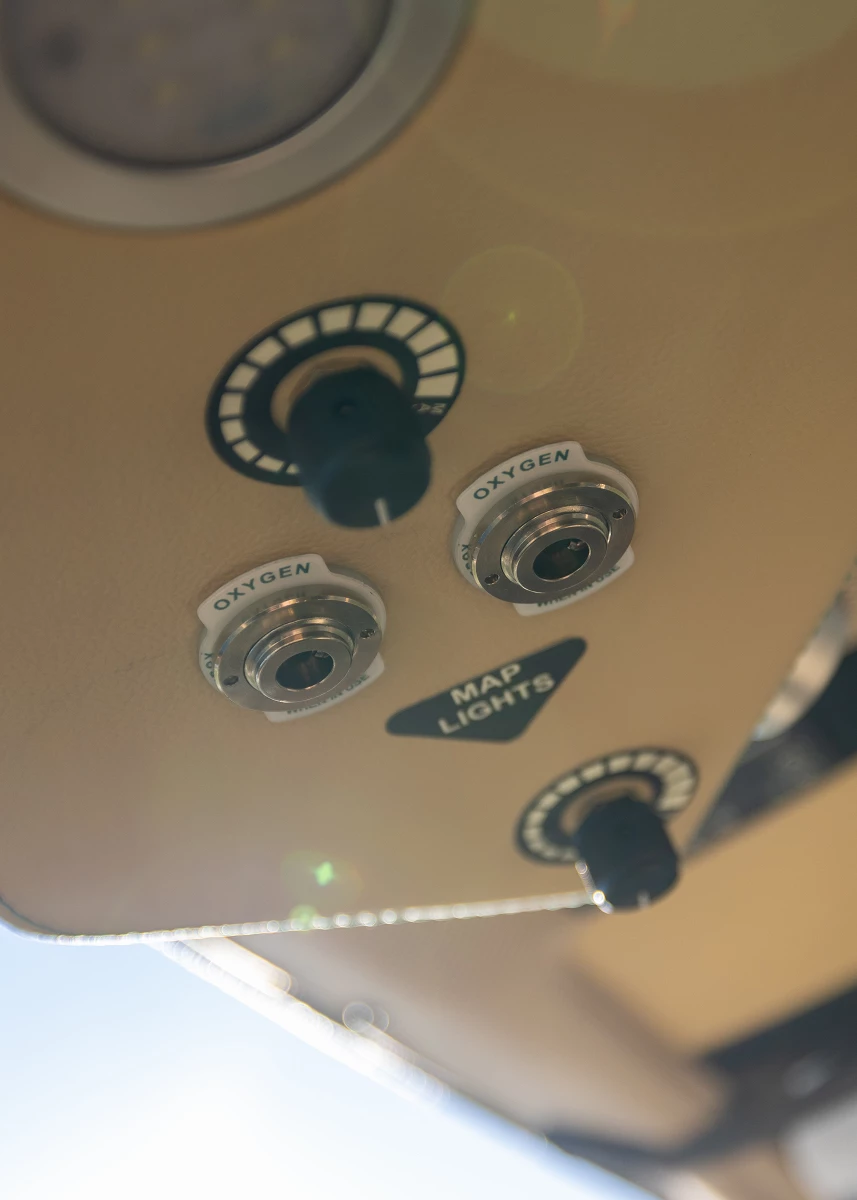
The DA50RG is powered by a Continental CD-300 engine and runs on JET-A1 fuel. This results in an average fuel consumption of 13 gal/h when flying at a cruise speed of 160 KTAS. This gives us a range of approximately 700 nm (including alternate airports and fuel reserves) under economical flight conditions. As befits a high-end aircraft, the CD-300 engine is equipped with a turbocharger and allows flight up to FL200. To enhance flight comfort, the aircraft is equipped with a built-in oxygen system and a TKS de-icing system—this significantly expands IFR flight capabilities in winter and on colder days.
Using JET-A1 fuel not only reduces fuel consumption and lowers costs, but also increases the number of available airports. While the availability of AVGAS is relatively good in Poland, at larger commercial airports and at many airports in Scandinavia, JET-A1 is the only fuel available. This opens up a wide range of possibilities.
We can carry a maximum of 549 kg on board, and 400 kg with a full fuel tank—this allows for comfortable travel for four people with a small amount of luggage while keeping the fuel tank full. The DA50’s certified weight is 1,999 kg—this also allows us to avoid Eurocontrol fees, which are charged for aircraft weighing more than 2 metric tons. It’s worth noting that the aircraft was certified in Europe (EASA) only at the end of 2020, and in the U.S. (FAA) in 2023.
![DA50_20241016_4559.jpg [22.37 MB].](https://www.jbi.com.pl/storage/image/core_files/2024/12/23/f70468077be8ccf0426558d28ba416b1/jpg/jbinvestments/preview/DA50_20241016_4559.webp)
In the air
Kuba flew this model alongside the owner not only during the photo shoot, but also during the ferry flight from the factory in Austria—“Flying at an altitude of 8,000 ft, at 90% power, we maintained a speed of about 160–165 KTAS.” I usually cover the route from LOAN to Konstancin near Warsaw in about 3 hours. In the DA50, our flight time was 2 hours and 20 minutes, and upon landing, we still had enough fuel for another 2 hours of flight, which was enough for the owner to easily reach his destination airport in Białystok.”
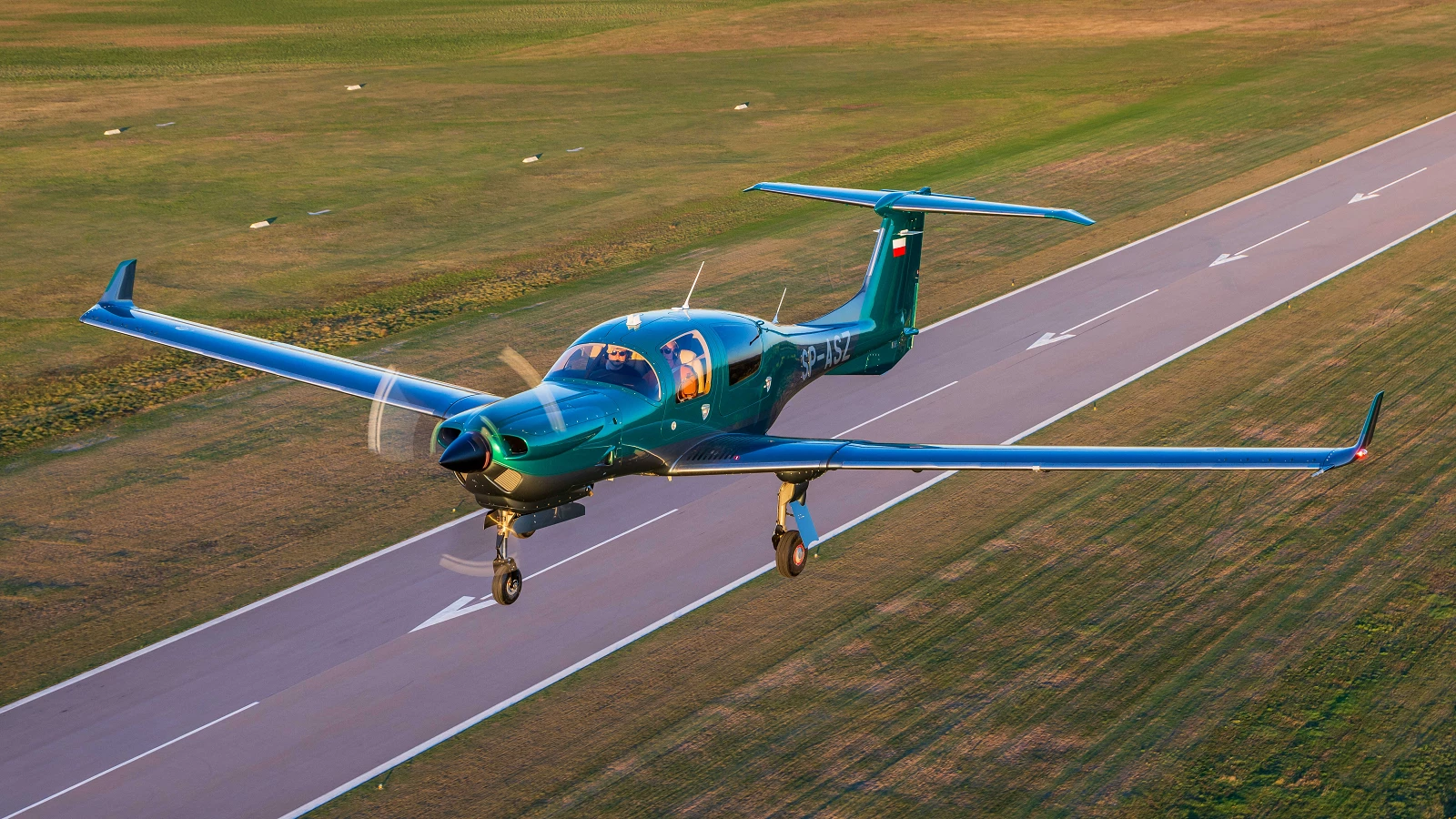
Visibility from the cockpit is very good, both during flight and during takeoff and landing. The CD-300 engine significantly extends the length of the nose compared to other aircraft, which may seem problematic, but you can easily get used to the different nose profile while taxiing.
“Landing this plane was a very pleasant surprise,” says Kuba. “First of all, the dual slot flaps allow the plane to slow down instantly in the air, which isn’t always easy for aircraft with a T-tail and long wings. On top of that, the landing gear is very well cushioned, and every landing—even the rougher ones—feels very soft.”
The stall speed is only 58 KCAS (landing configuration), which allows the aircraft to come to a stop on the ground in less than 350 meters—this opens up many possibilities for those wishing to land at short grass airfields. For pilots who have previously flown faster aircraft, maintaining a speed of 75–90 KCAS during the approach should not be a problem. Type rating training also depends on the pilot’s prior experience, and the aircraft handles very similarly to the DA40. The main differences are the size of the aircraft, the onboard equipment, and higher speeds.
The DA50RG is gaining increasing popularity on the Polish, European, and American markets—it brings a breath of fresh air and solutions that should have been adopted as standard in General Aviation long ago. We already have four aircraft of this type in Poland—and we hope to see even more in the coming years.
Text and photos:Filip Modrzejewski